My first chair, I remember it well. The slats were Osage Orange. I just wanted to try that wood. But Osage didn’t split cleanly. It was brittle, the grain was interlocked, everything you didn’t want when trying to make a chair efficiently with a drawknife.
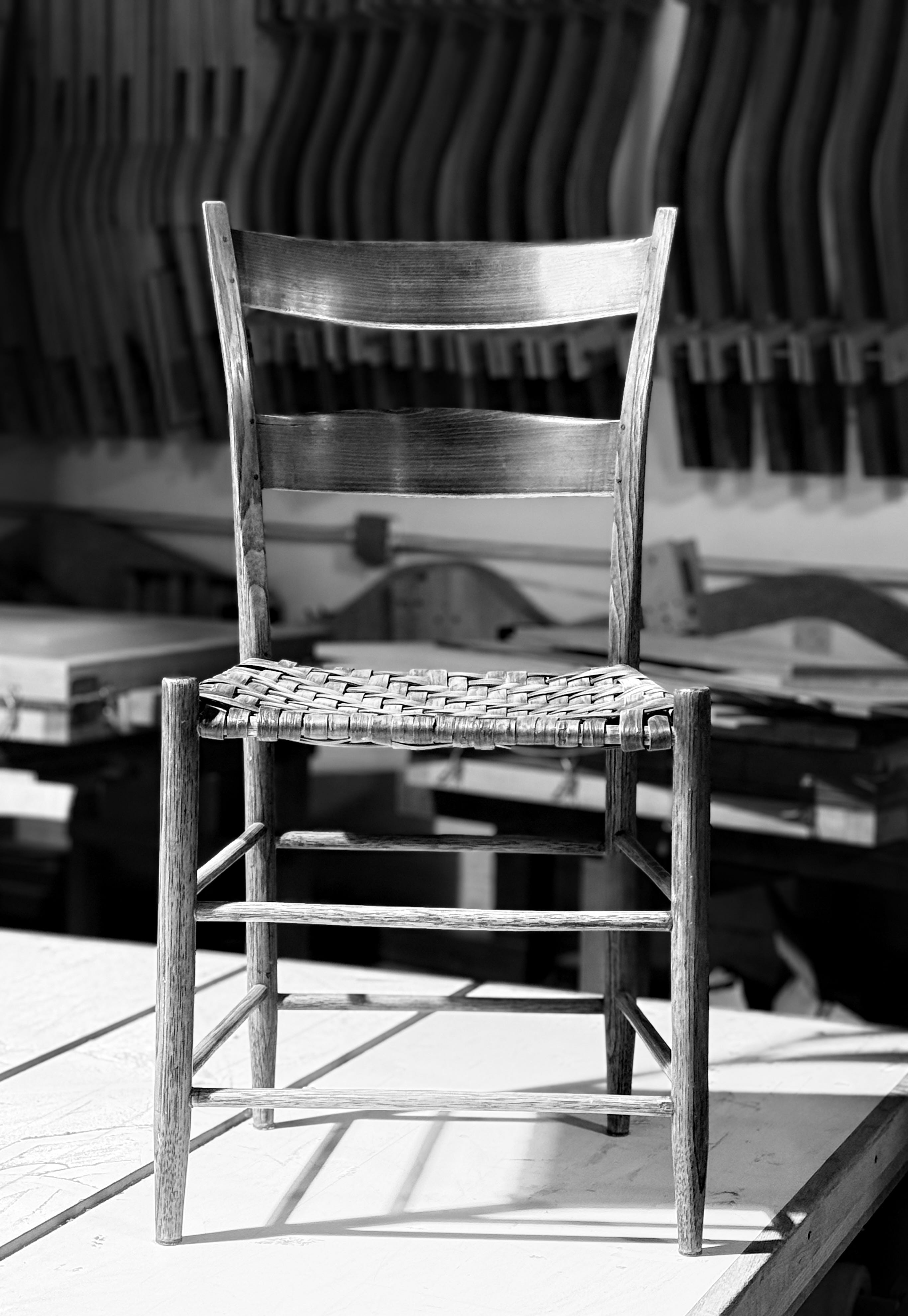
1982 – Brian’s first chair – From John Alexander’s book.
So I ended up doing something I wouldn’t recommend: I turned that drawknife up on its edge and scraped. Hard. Brutally hard. It wasn’t good for the knife, and it wasn’t a pretty surface. But it got me to a relatively flat result through sheer force. From that very first chair, I gained a deep respect for what scraping can do as a problem-solver.
My introduction to furniture making was a little different than most woodworkers. I started with a very primitive toolkit. The primary tool of my early woodworking was a drawknife. I used it for everything, tenon cutting, slat flattening, coarse and fine shaping, because it was really the only shaping tool I had. I was purchasing logs, splitting them into parts, and using a broad hatchet when needed for initial dimensioning.
I’ve carried that mindset ever since.
After 43 years of woodworking, I’ve decided to turn more of my attention to sharing what I’ve learned. My goal isn’t just to teach techniques. It’s to improve your experience in the shop, the same way we tried to improve people’s experience in their homes with intentionally wrought furniture.
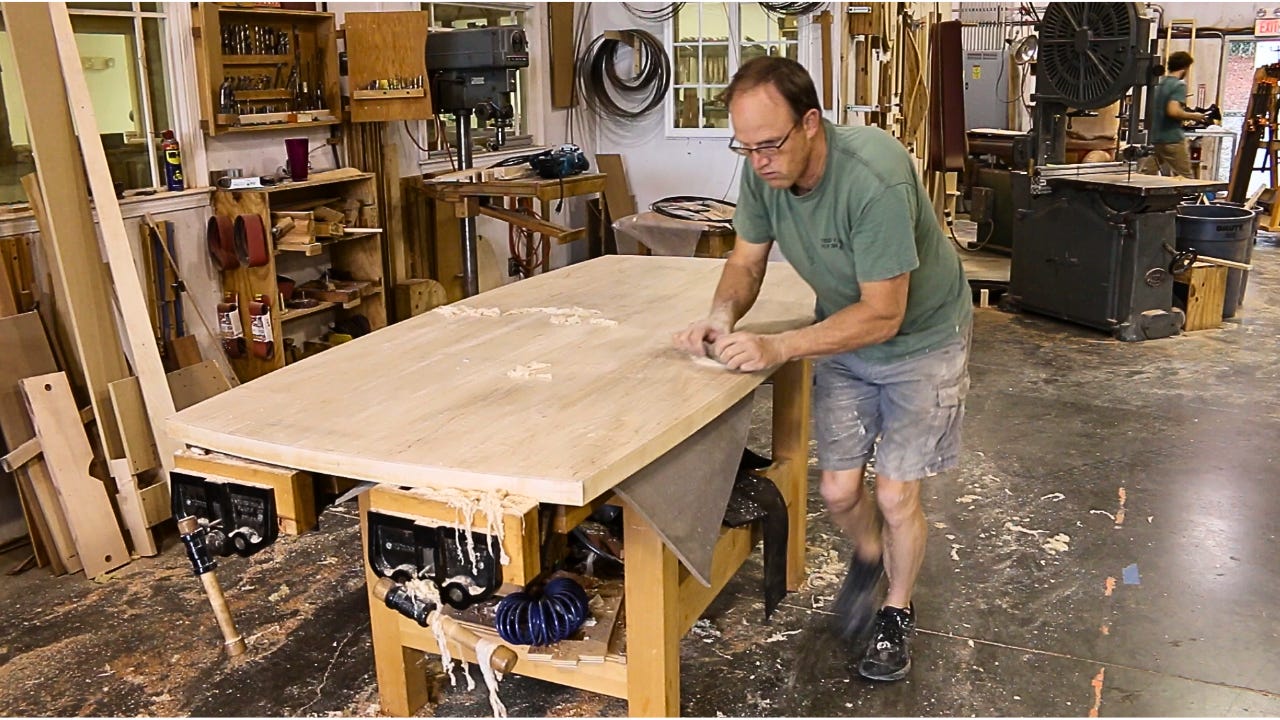
More recently, I faced a different kind of brutal scenario. A large table with an epoxy finish we were making cured with hundreds of bubbles. That was too many to spot fix, so the epoxy had to come off. We had a wide enough belt sander but the table at this stage was not flat enough overall to remove the finish with the sander without risking the veneer below. Finish remover isn’t effective enough, so scraping it was.
Seven and a half hours of non-stop scraping. It wasn’t long before my thumbs got hot. I kept flipping the scraper, switching scrapers, trying to cool it down, but that was slowing me down too much. So I made a decision: just plow through it. It’s probably just uncomfortable, not actually damaging my thumbs.
This isn’t the epoxy table I mentioned, just one of many I scraped before we got our wide belt sander.
By the end of the day, I discovered I was wrong about that. Scraping that much epoxy will put a blister right in the middle of your thumb pad. Lesson learned. But I also learned a great deal about building a durable burr that holds up under that kind of punishment, and how to work close to a veneer without going too far. I still don’t know a faster or better way to have handled that situation. It left the surface ready to finish without a single chemical involved. And it got me out of a pickle.
Those are two of the more brutal scraper stories I have. Most of the time, scraper work is far more elegant than either of those cases. But I tell them because they illustrate something I want you to take seriously: the scraper has a much broader range than most woodworkers allow themselves to imagine.
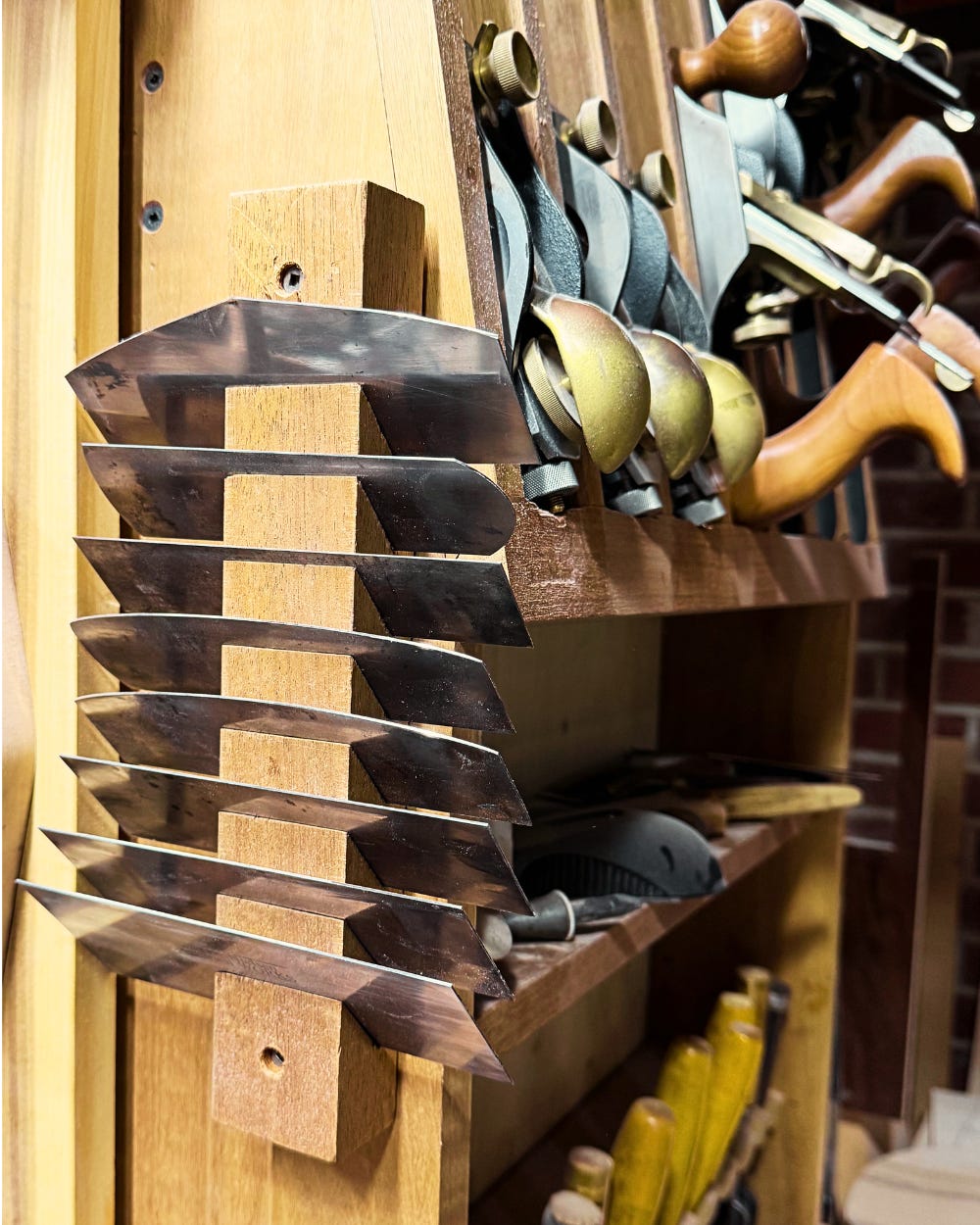
My scraper stash – different shapes for different purposes.
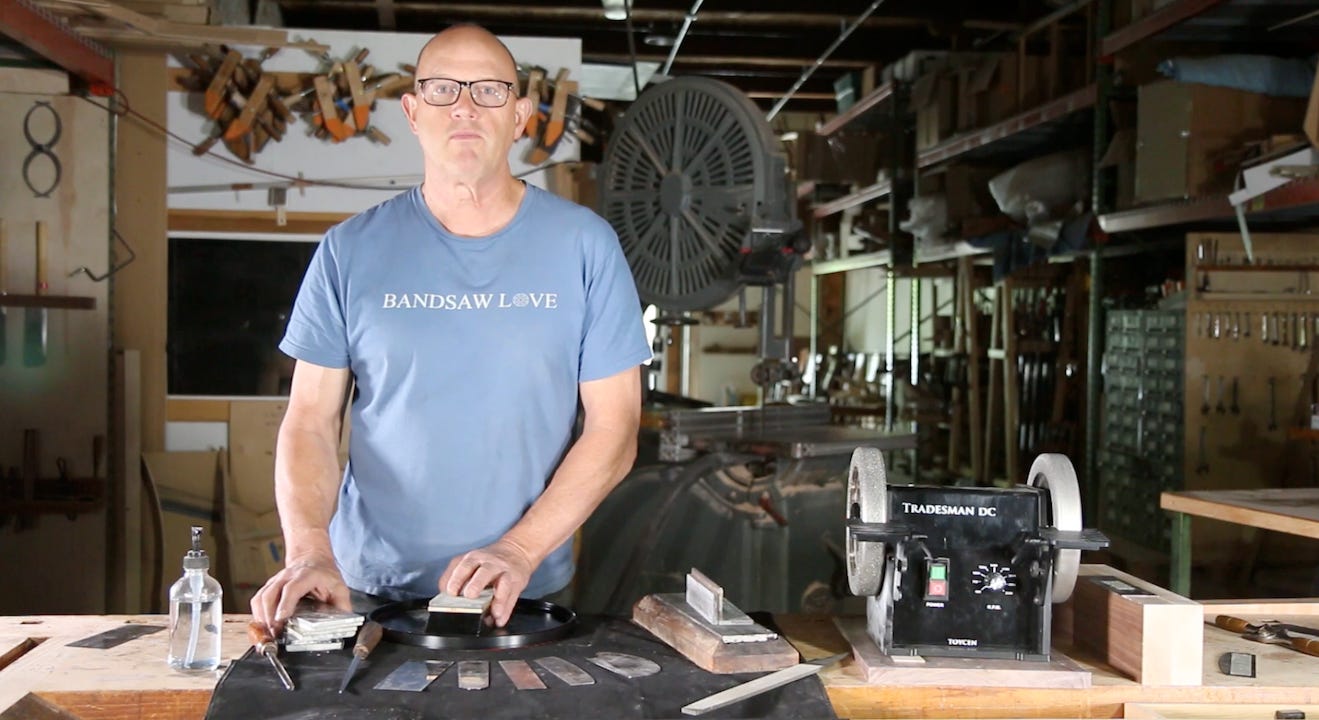
With this Card Scraper Mastery class, I want to open your eyes to the vast potential of a card scraper. This class is the beginning of a deeper relationship with one of woodworking’s most versatile hand tools. And it’s the beginning of a journey toward mastery. The first step on that trail is understanding what this tool is truly capable of.
Whether the scraper comes to mind as your solution to a problem depends almost entirely on your confidence with it, your ability to sharpen it, use it efficiently, and know what it can and can’t do. The broader the situations you put yourself in with a scraper, the more openly you’ll think about it as a tool for getting out of trouble.
That’s what this class is really about. Not just techniques, though we cover those carefully, but opening your mind to what this tool can do. I use stories to illustrate the card scraper’s range of problem solving. I demonstrate and explain specific techniques to teach how I used the scraper to end these stories with the results I wanted so you can achieve them too.
Here’s what two of our students had to say:
“Boggs Bench is hitting all the right notes with Substack blogs and affordable online courses. There are many good online people with videos and blogs reaching out to new hobbyists to the craft, but few for those like me with decades of self-taught experience who want to hear from an established, successful woodworker with information that will improve and add to our own experience. Card Scraper Mastery is the perfect example. I have used card scrapers for decades and taking wide, heavy shavings was the apex of use. Now I know there is not only much more that can be done with a card scraper, but how to set it up and do it is a revelation. I wish you the best in this endeavor, for I will be along for the ride.”
— Dave Lamoureux, Card Scraper Mastery Student
“I want to second what Dave said! I haven’t even finished the course yet, but I have learned a lot. Thanks for taking the time to put this together. It is exceedingly helpful for those of us who don’t have the firsthand experience of working with successful people in woodworking, it goes much further into the subject than anyone I’ve watched on YouTube.”
— David T., Card Scraper Mastery Student
Every stroke with a well-tuned scraper is a pleasure. It won’t replace every tool in your arsenal, but among them, it is a remarkable player. What we’re sharing in this class is a solid package of techniques that I believe will open up real new possibilities, not just for the elegant situations you plan for, but for the messy ones you don’t.
It’s a quick way out of a lot of situations. And once you see that, you won’t want to work without it.
Card Scraper Mastery with Brian Boggs
Learn how to sharpen for the task at hand, prepare surfaces for finish, shape contours, and solve real shop problems with confidence.