
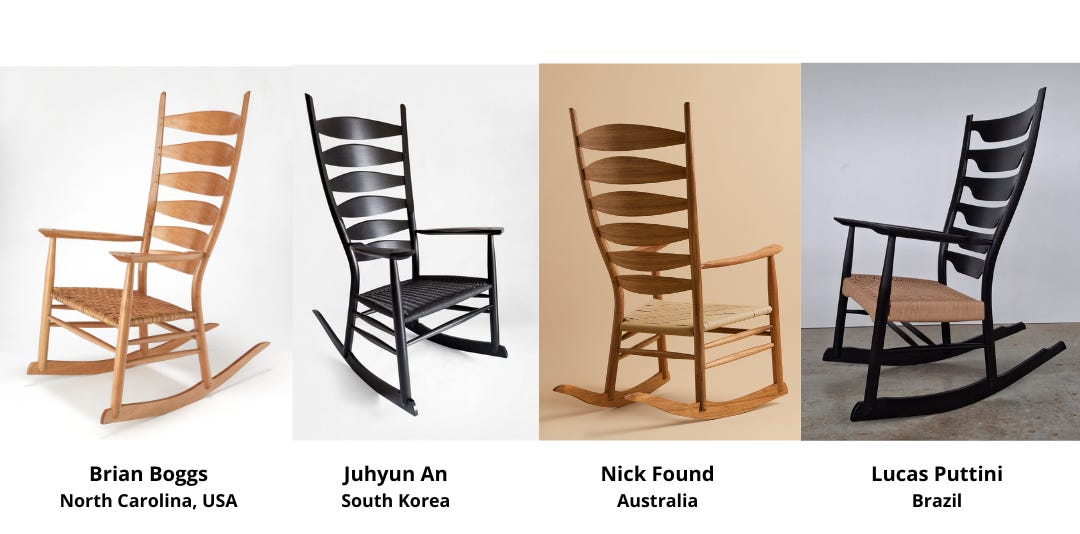
Every now and then, someone sends me an Instagram post or a photograph of a Boggs chair they’ve made. Sometimes it’s from someone I taught years ago. Other times it’s from a person I’ve never met, working in a shop halfway around the world.
And there it is. One of my chairs, beautifully rendered and often reflecting elements of the maker’s personality.
I never quite imagined how far these chairs would travel.
For nearly thirty years, the three-slat and two-slat Boggs chair families were staples of my chairmaking business. Side chairs, armchairs, bar stools, rockers, and their many variations put food on the table for my family and our team and kept the lights on in the shop.
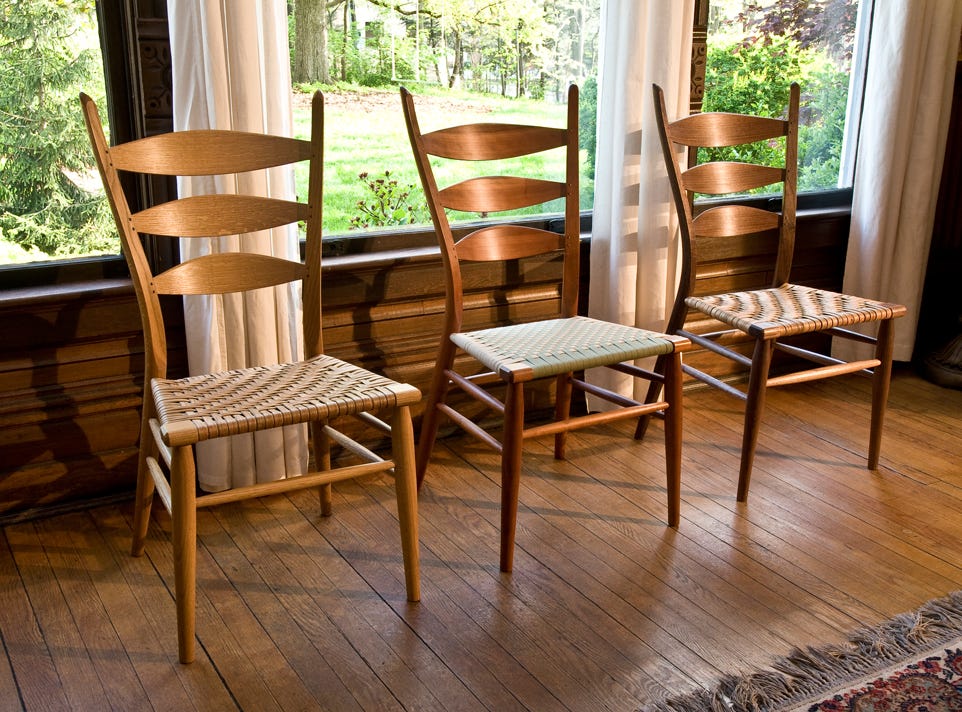
A trio of ladderbacks built at our shop in Asheville, NC. showing a couple of seat options we offered then, bark and shaker tape.
But the chairs we were making toward the end of those thirty years weren’t quite the same as the ones I’d started with.
I was always changing something. The angle of a joint. The shape of a part. The sequence of operations. A jig that made a difficult task easier or more reliable. Sometimes a small adjustment made a surprising difference. Other times I spent weeks pursuing something that didn’t improve anything at all .
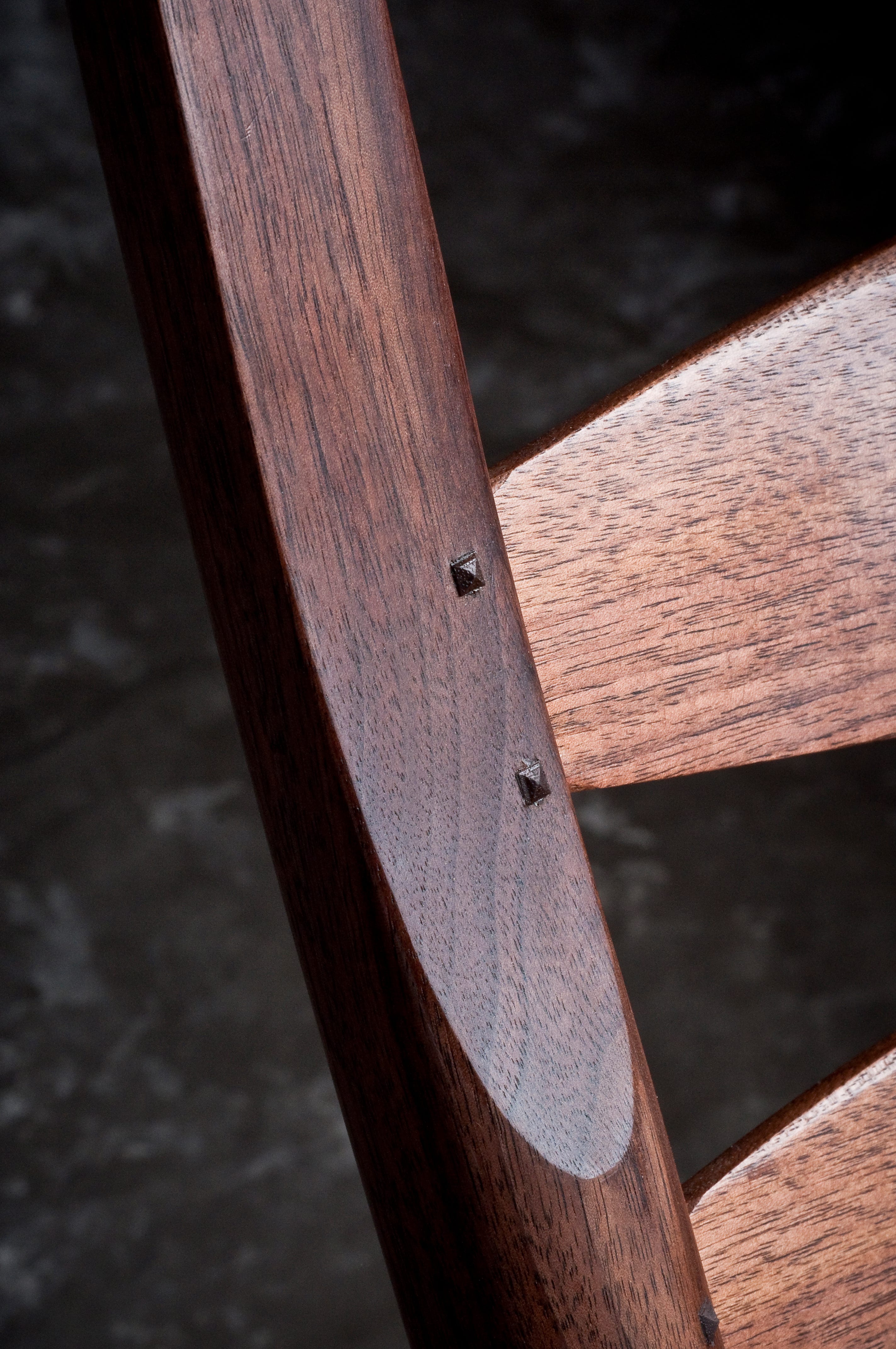
Slat and pin detail from a walnut rocker we made in Berea, Ky
That’s the nature of design. You don’t arrive at the answer once and lock that in. The questions keep coming in if you’re listening.
Over time, those questions changed not only the chairs but the entire process of making them.
More Than a Chair
Ladderback chairmaking belongs to a tradition much older than any of us. Generations of makers, most of whose names we’ll never know, developed the forms and techniques we continue to draw from today.
I was fortunate to encounter Jennie Alexander’s Make a Chair from a Tree in 1980. The book offered a way into greenwood chairmaking, including some early jig designs. It was part of a much larger tradition of knowledge being passed from one maker to another.
As I began making chairs myself, I encountered problems that called for new solutions. Some required a better technique. Others called for a different tool altogether. Over the years, I designed my own shaving horse, developed a line of spokeshaves, built steam boxes, and created countless jigs and fixtures. I also designed a machine for processing hickory bark for weaving seats.
These weren’t separate projects dreamed up in isolation. They grew out of the demands of making chairs day after day, trying to improve the quality of the work while making the processes more efficient and repeatable.
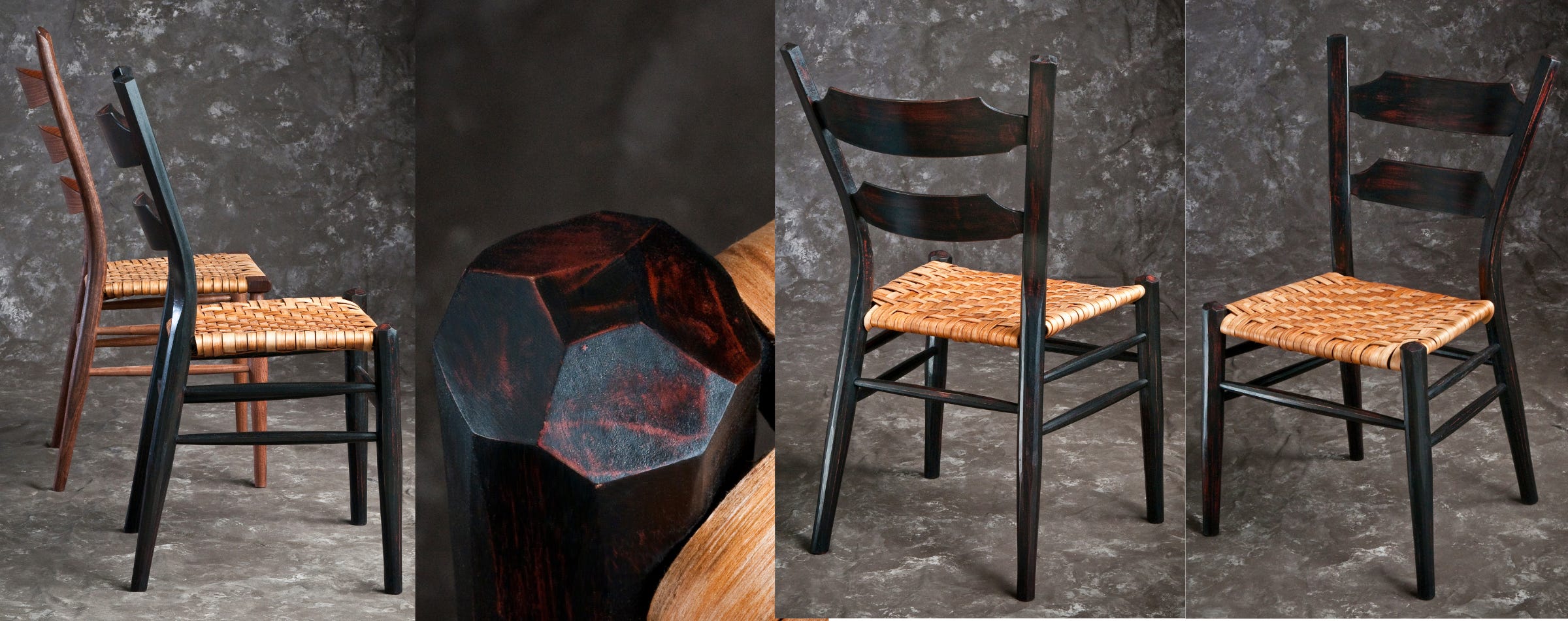
A three-slat Boggs Ladderback alongside a two-slat Greenwood chair, with a close-up of the Greenwood’s front leg extending through the seat frame and two additional views of the finished chair. A Greenwood settin’ chair, pitched back a bit for hanging out on the front porch.
Many of these tools now have lives beyond my own shop. Plans for my shaving horse are available to other makers. Lie-Nielsen continues to manufacture my spokeshaves. And after a long hiatus, the bark machine is once again processing hickory bark for a growing community of chairmakers.
The chairs helped bring these tools into existence. Now the tools are helping others make chairs.
But tools and jigs were only part of the equation. When you’re making a chair yourself, you can get away with a lot of things that live only in your hands and your head. When you’re teaching someone else to make that chair, you have to figure out how to communicate what you know.
Working alone, I developed my own chairmaking language that didn’t always translate easily to others. Teaching challenged me to find ways to communicate the principles behind the processes. And students often brought questions and perspectives that helped me refine those processes further.
Why does this angle matter? What happens if this part is a little thicker? How do you repeat an operation accurately without having to think your way through it every single time?
Teaching became another way to question and refine what I thought I knew.
Passing It Along
Over the years, I taught many students and employees, some of whom went on to become accomplished chairmakers and teachers themselves.
Russ Filbeck began learning from me and teaching chairmaking in 1995. Nearly two decades later, Jeff Lefkowitz began teaching my chair designs, followed by David Douyard in 2016. All three have played important roles in carrying this knowledge beyond my own shop through classes, books, manuals, and the many makers they’ve taught.
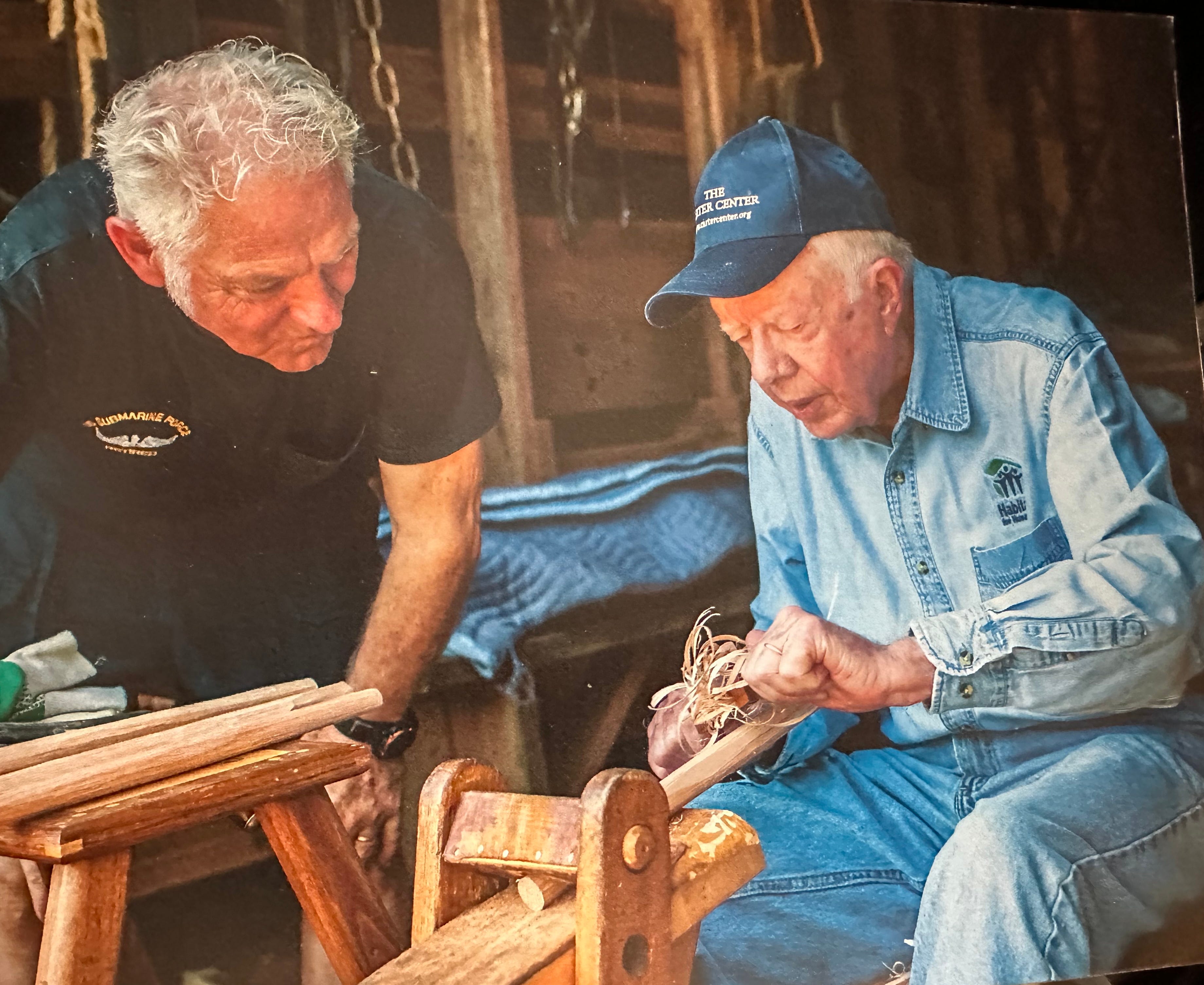
Russ Filbeck shares chairmaking techniques with former President Jimmy Carter on the shaving horse.
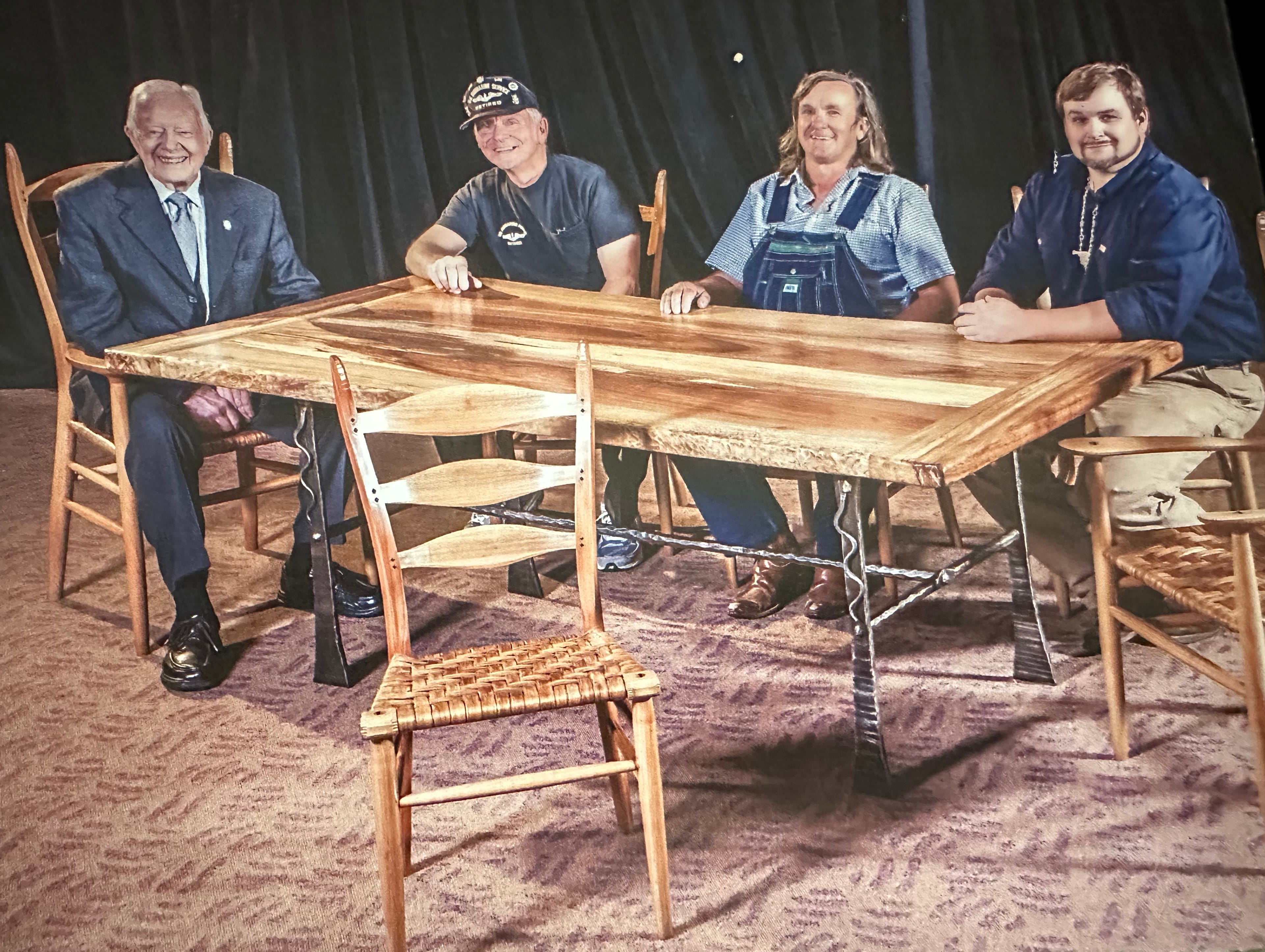
Former President Jimmy Carter with Russ Filbeck and fellow makers, surrounded by Boggs-inspired Ladderback chairs and a handcrafted table.
For a long time, there was one understanding: people were welcome to make these chairs for themselves, their friends, and their families, but not to build a business around my designs.
That changed in 2019.
After nearly thirty years of making a living from these chairs, I opened the door for other makers to do the same. What had begun as a way to produce chairs in my own shop had grown into an entire chairmaking ecosystem of designs, tools, techniques, and accumulated knowledge.
Of course, having the information doesn’t make the work easy.
A Boggs chair is demanding to make well. There are curves, angles, relationships, and details that ask a lot of the maker. Instructions can tell you where to start, but they can’t give you the judgment that comes from working with wood over time.
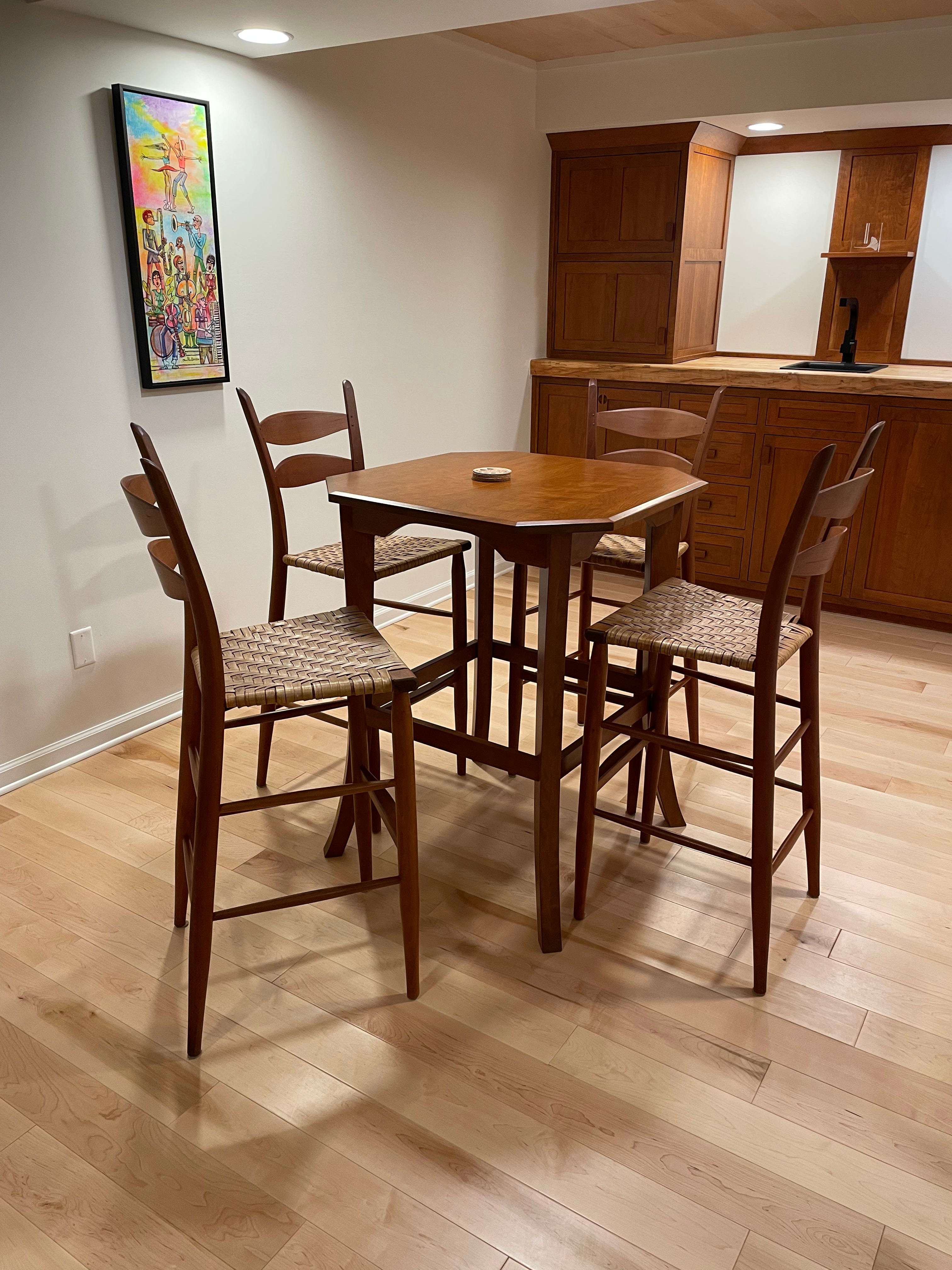
Boggs Ladderback Bar Stools in a client’s home.
That still has to be earned.
And I have a great deal of respect for the people who take on that challenge, particularly those who stick with it long enough to develop real command of the work.
A Craft Without Borders
Seeing where these chairs have traveled, and what others have done with them, has been deeply gratifying.
People have learned from teachers who learned from other teachers. Makers have built these chairs in places I’ve never visited, often using tools and methods that grew out of my own shop. But many have also had to find their own solutions, adapting the processes to the woods, materials, and tools available where they live. In some ways, they’re doing exactly what I did when I began.
I know of people making Boggs chairs in Australia, Brazil, Japan, Korea, Scotland, the United States, and other parts of the world. And I suspect there are many more out there whose work I’ve never seen.
Recently, I’ve been hearing from several of these makers, and their stories have reminded me how differently people can find their way into the same craft.
Closer to home, Greg Horton, who teaches and helps run the Philadelphia Furniture Workshop, recently built his first Boggs Armchair with Jeff Lefkowitz. Greg was drawn to the design, particularly the shapes of the back slats and the contrast between the faceted arms and the smooth rungs and legs. Greg hopes to introduce the Boggs Armchair as a more advanced class at the workshop, building on its existing chairmaking program based on Jennie Alexander’s design.
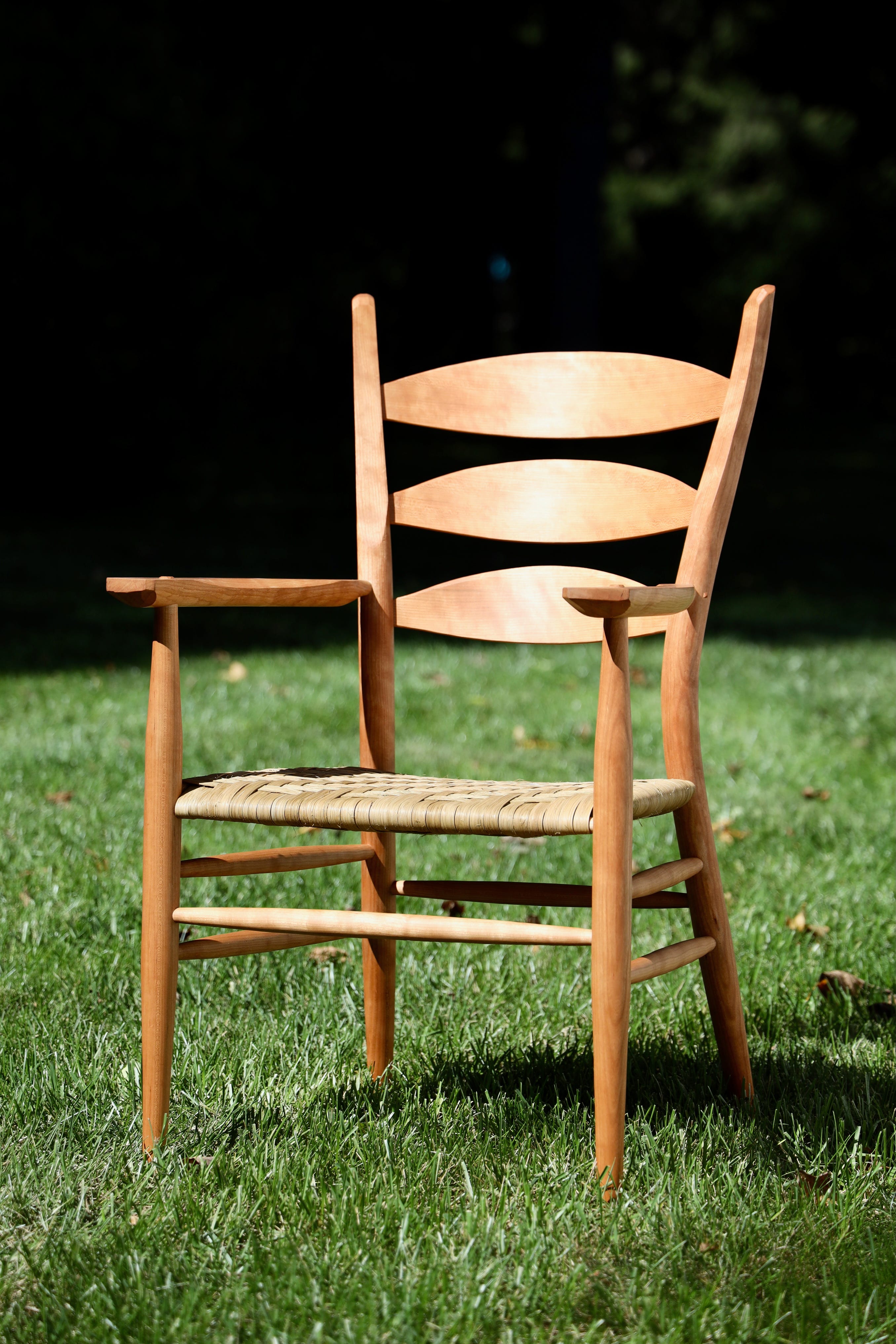
Greg Horton’s first Boggs Armchair. He hopes to introduce it as a class at the Philadelphia Furniture Workshop.
In Korea, Juhyun An came to chairmaking with a background in architecture and furniture making. Inspired by the Boggs Rocker, he connected with Jeff Lefkowitz, who helped guide him through building his first one via phone calls. He now hopes to introduce Boggs chairmaking to more people, extending the same generosity he received from Jeff.
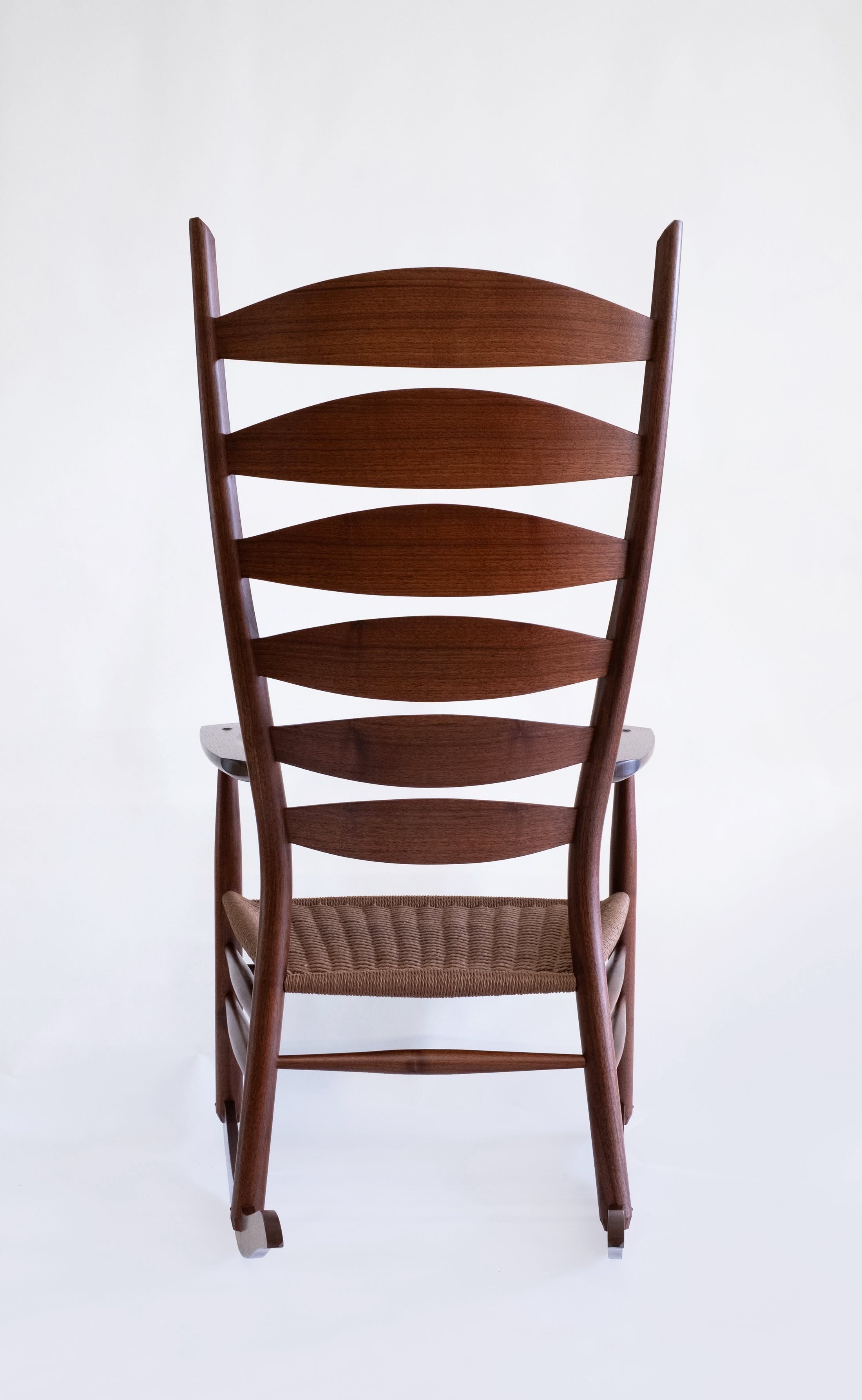
Juhyun An’s Six-Slat Boggs Rocker, showing the shaped back slats and woven cord seat.
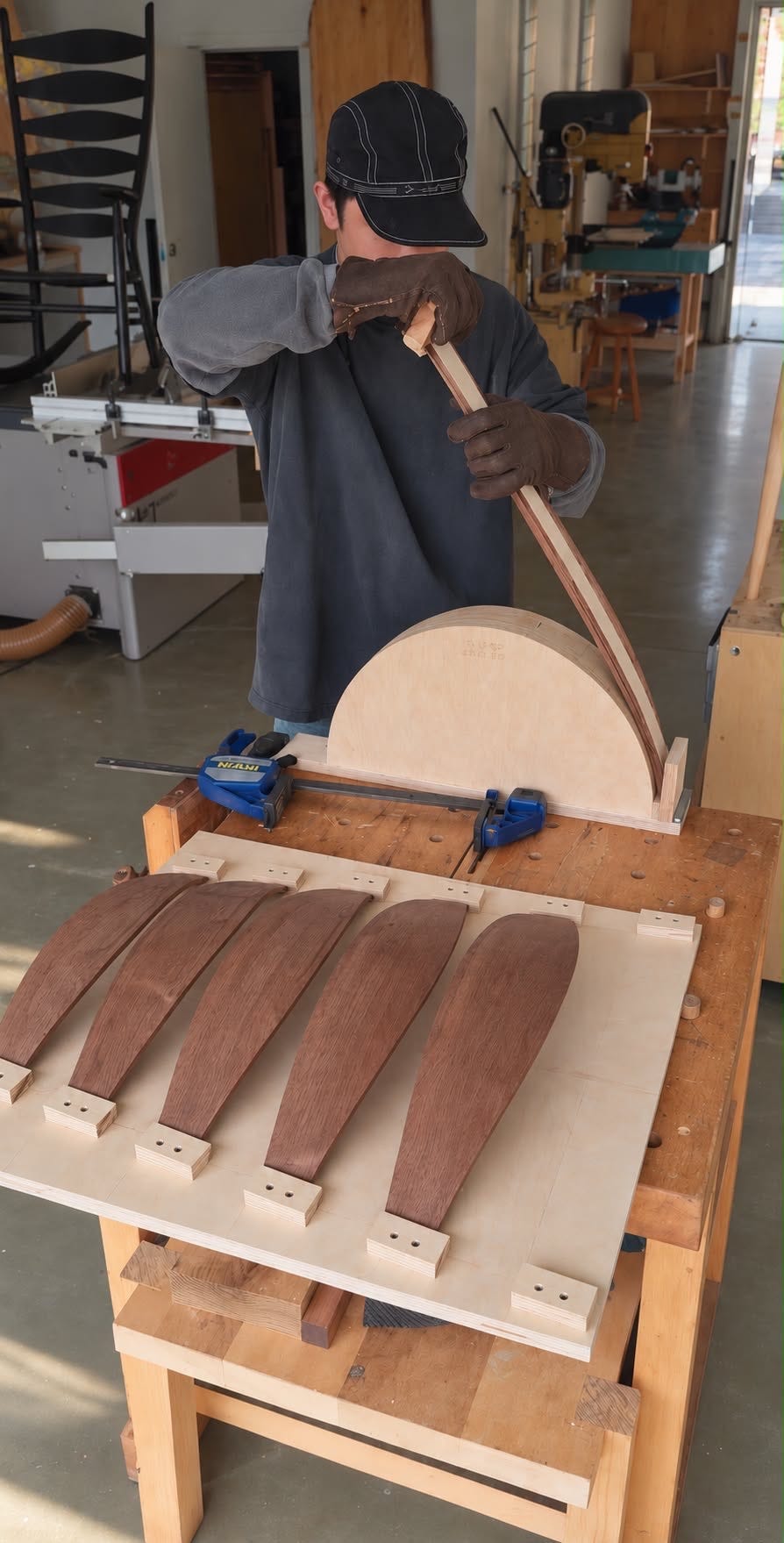
Juhyun An bending back slats in his South Korean workshop. https://www.instagram.com/anchitecture/
In Australia, Nick Found spent twenty years as an industrial designer before finding his way into post-and-rung chairmaking through David Douyard. He’s made a remarkable number of chairs, working with Australian Blackwood, and still finds himself captivated by the geometry of these designs. He’s also teaching, even as he describes how rare it is to find fellow ladderback chairmakers nearby with whom he can explore the finer points of the craft.
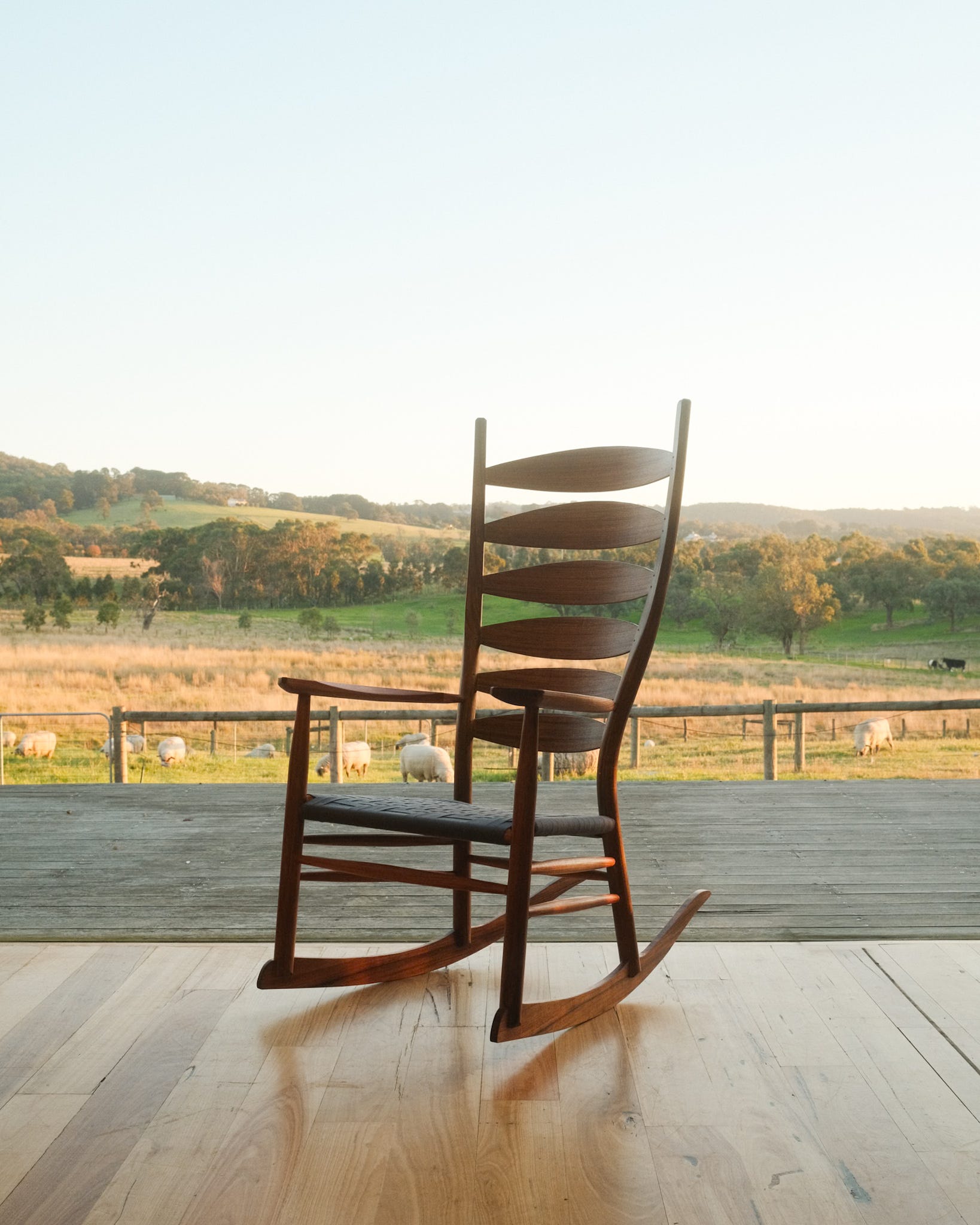
A Boggs Six-Slat Rocker made in Australia by Nick Found of Field & Found Chairmakers.
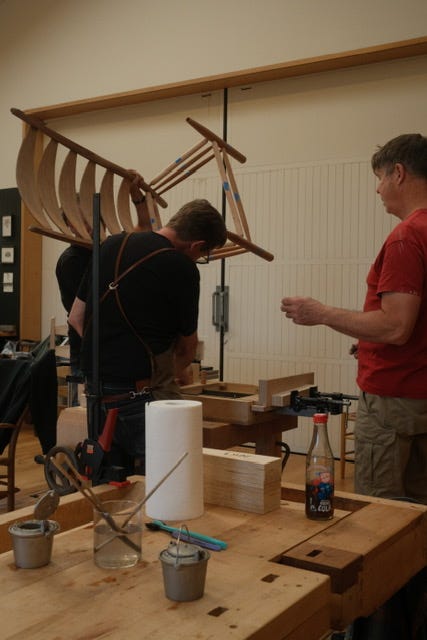
A Boggs rocker taking shape in the workshop at Field & Found Chairmakers. https://www.instagram.com/field.andfound/
And in Brazil, Lucas left a career in aerospace engineering to become a full-time woodworker. He’s adapted the Boggs Rocker using local copiuba wood, Danish cord for the seat, and an iron-acetate finish. He describes these chairs as his “labor of love” and talks about the pleasure of inviting other makers to explore the tradition alongside him.
Lucas wrote something that particularly struck me:
“Acknowledging the work we do is part of a much greater collective effort only makes it more meaningful and beautiful.”
I couldn’t agree more.
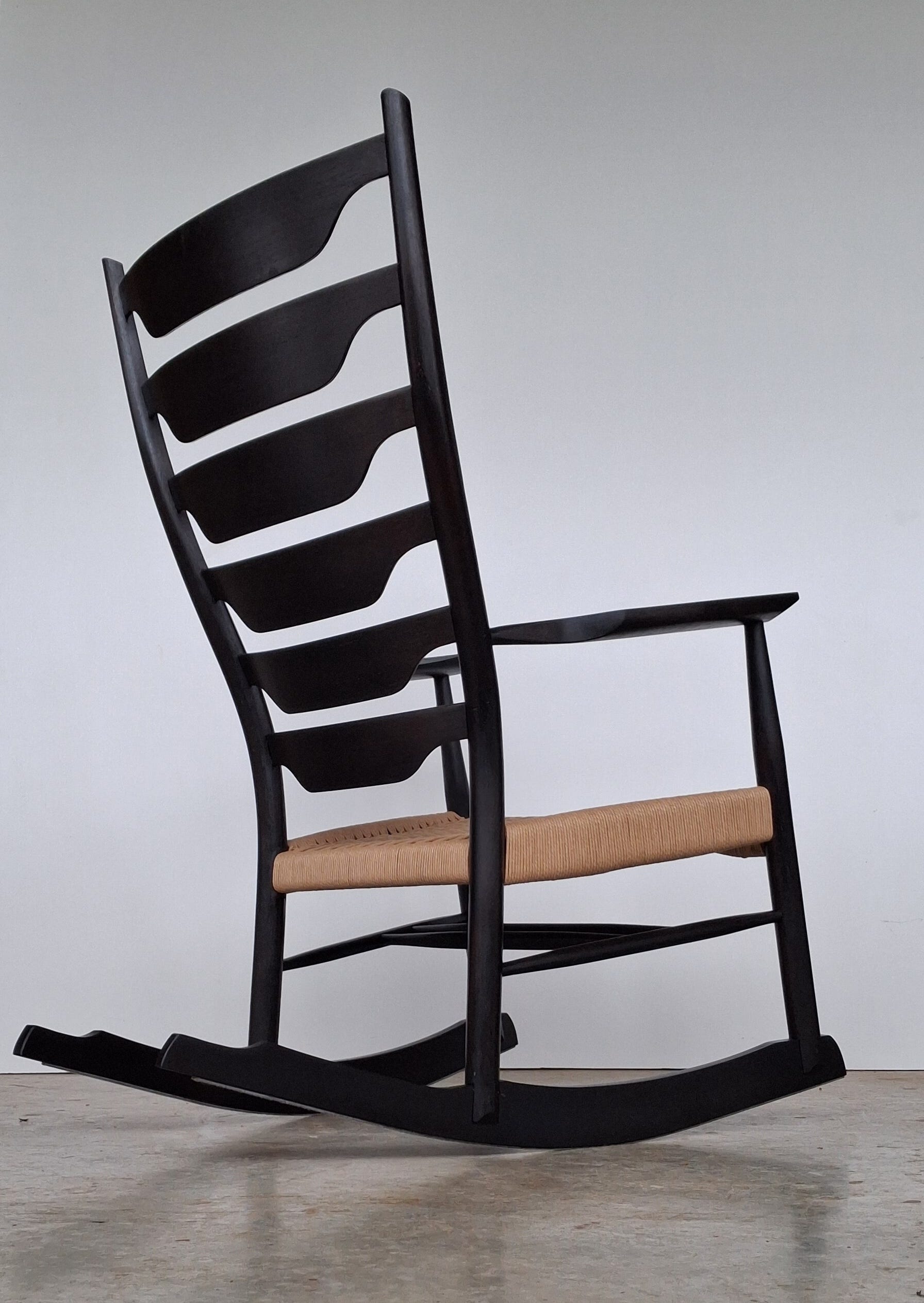
Boggs Six-Slat Rocker by Lucas Puttini, made with Brazilian copiuba wood, a woven Danish cord seat, and a blackened finish. He moved the cross rung from the front to center gives the sitter more leg room as one rocks back. The slat shape and runner end detail give this chair its own personality. A very nice touch from Lucas.
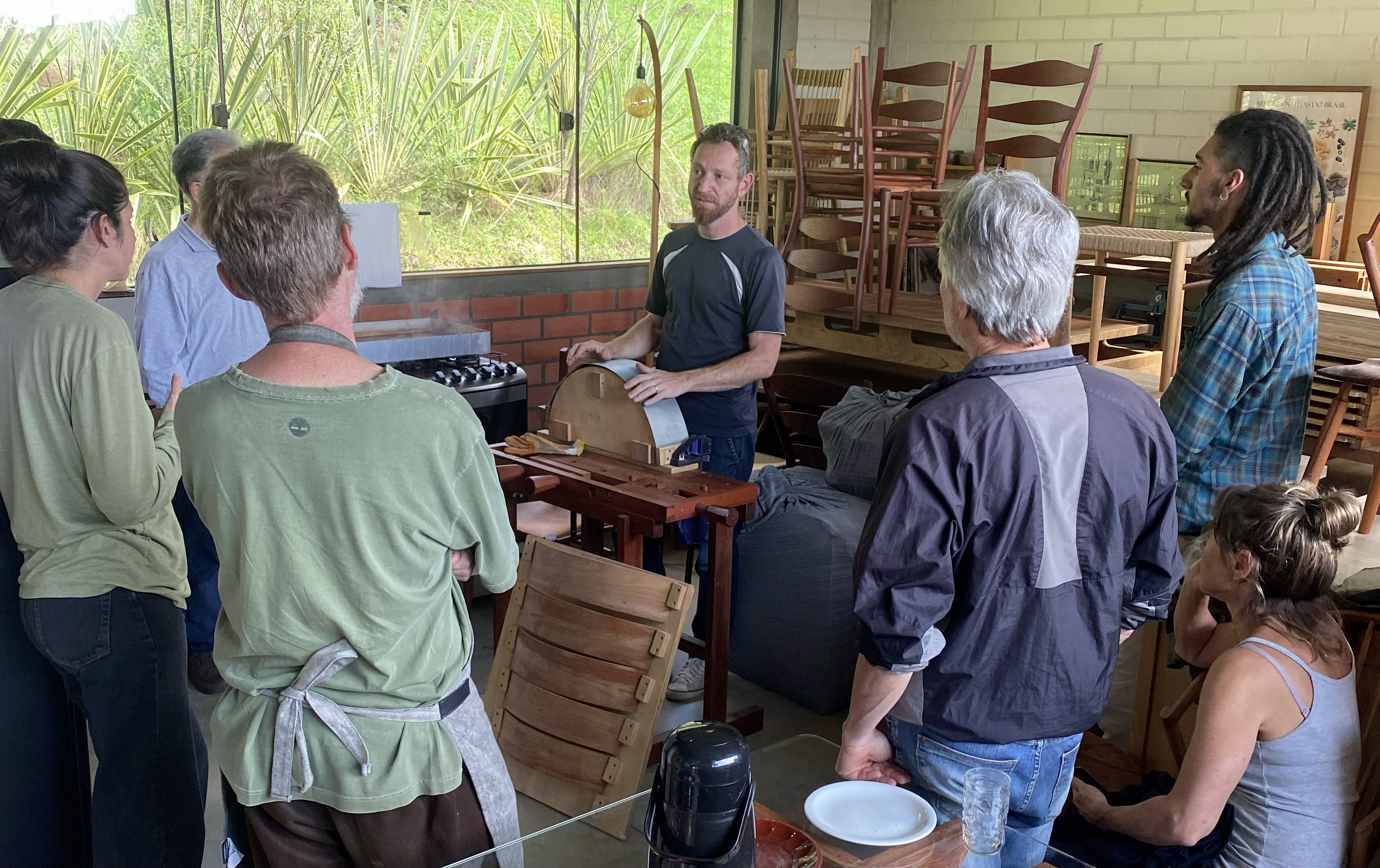
Lucas Puttini demonstrating steam-bending techniques during a Boggs chairmaking class at Marcenaria do Bosque in Brazil. https://www.instagram.com/marcenariadobosque/
These are just three of the many people making Boggs chairs today. What strikes me isn’t just that they’re building my chairs. It’s the enthusiasm they bring to the work, the ways they make it their own, and their willingness to share what they’re learning.
What Carries Forward
These chairs have challenged people to develop new skills, given teachers something substantial to share with their students, and found their way into homes, workshops, and classrooms far beyond my own shop.
I don’t think a design stops belonging to its history when other people begin making it. If anything, that just broadens its appeal. Understanding where it came from adds something to the perspective as we see the craft grow roots in distant cultures.
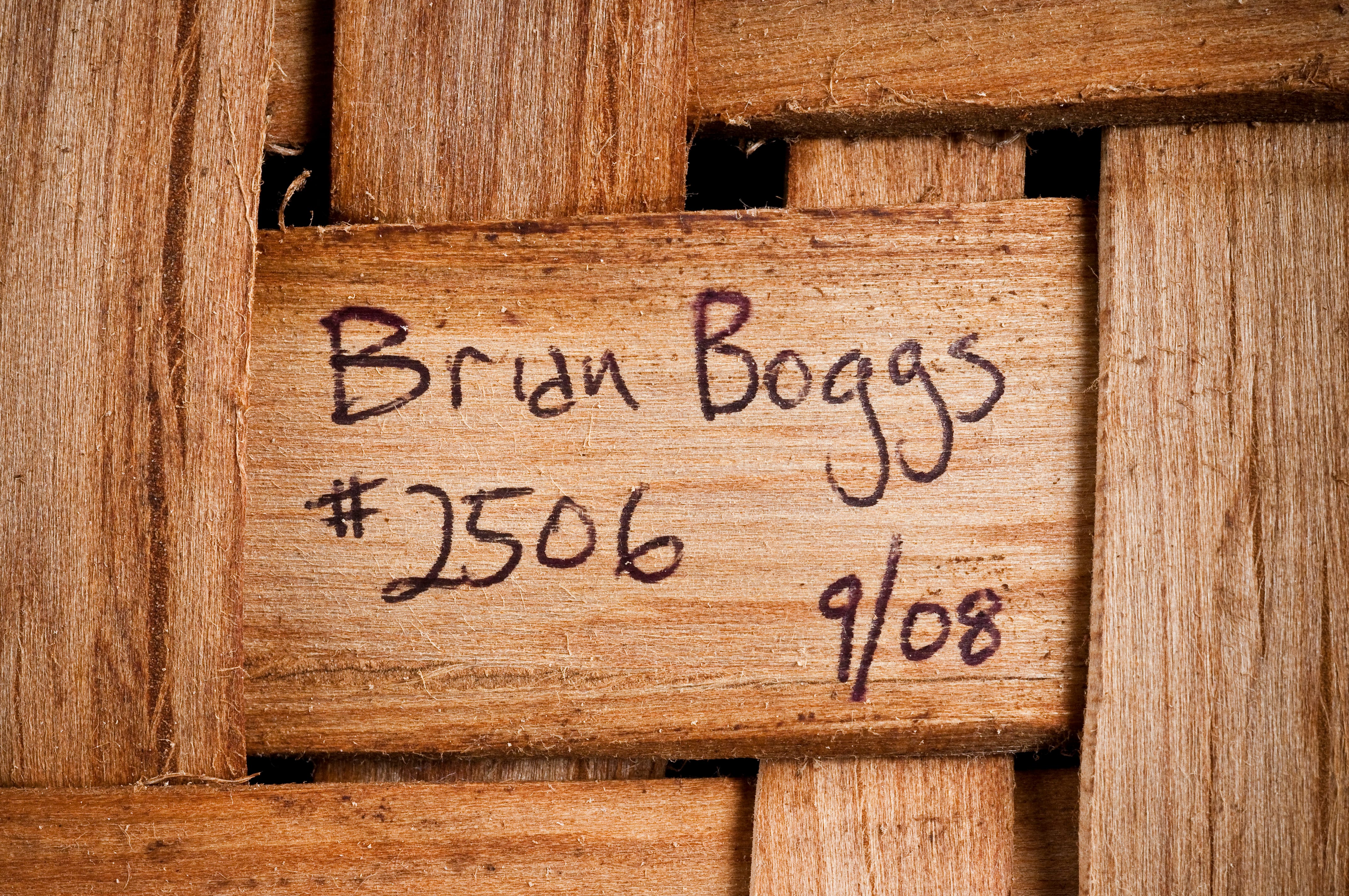
My name and chair number beneath a handwoven hickory bark seat. I began signing and numbering my chairs around the 600th, though a few got away without either. This is No. 2506, made in September 2008.
Every craft has a lineage. We learn from people who learned from others. We inherit solutions to problems we may never even realize someone had to solve.
I certainly did.
I’m grateful to the craftsmen who taught me, including Dave Sawyer, Jennie Alexander, and Carl Swenson. I’m grateful, too, for the students whose questions became some of my own most valuable lessons.
Russ Filbeck once ended a reflection on our chairmaking history by thanking me for sharpening a flathead screwdriver into a chisel and teaching him to make his first ladderback chair.
He went on to thank me for beginning a legacy he believed would last for generations.
It’s humbling to think about that now, especially as I hear from people whose work I may never see in person.
I wonder sometimes just how many people are out there making these chairs. How many are teaching them? How many have built a business around them? How many have discovered, as I did, that the more chairs you make, the more you realize the lessons will just keep coming?
Whether you’ve made one Boggs chair or a hundred, whether you’re building them for family and friends, teaching classes, or making a living from them, you’re part of this story.
I’d love to hear from you. Tell me where you are, who taught you, how you came to make these chairs, and what the experience has meant to you. And please send photographs of your work. I’d love to see what you’ve made. You can share your story and photographs with us at Info@brianboggschairmakers.com
Perhaps together we can discover just how far this tradition has traveled.
After all, that’s how a tradition stays alive.
From the Bench — Brian Boggs
Explore more of Brian’s work
Brian Boggs Chairmakers — Explore Brian’s furniture designs, including chairs, tables, and other handcrafted pieces.
Boggs Bench — Discover woodworking courses, tools, plans, and educational resources.
Brian has spent more than four decades learning from wood, tools, mistakes, teaching, and making. He is still at the bench, working, questioning, experimenting, and finding new things to understand and share.
These essays are our way of capturing that ongoing work and putting it into the world.
If you believe this kind of knowledge is worth documenting and sharing, becoming a paid subscriber helps support the work of capturing it while Brian is still at the bench.

