
There’s a line from Malcolm Gladwell’s conversation with Paul Simon in Miracle and Wonder that has stayed with me. “The modern world tends to reward artists for staying recognizable, consistent, marketable, and safe.”
You see it everywhere. Actors become typecast into the same roles. Musicians become trapped by the sound that first made them successful. Product designers and manufacturers are often expected to repeat the same vocabulary over and over because that is what audiences, clients, and markets learn to recognize.
The more years I spend around furniture and craftsmanship, the more I realize woodworking is no different.
Most makers eventually become known for a particular look, a particular form, or a particular process. Sometimes that focus is intentional. There is real wisdom in restraint. Some craftsmen build an entire career around a narrow vocabulary and do it extraordinarily well.
But other times, the brand becomes something else entirely.
A boundary.
Not necessarily a chosen artistic direction, but the outer edge of what a maker feels confident enough to design and execute.
That’s a harder thing to talk about.
Because fear in craftsmanship rarely presents itself as fear. It disguises itself. This is just my style. This is what sells. This is what people know me for. And sometimes those things are true. But sometimes repetition does not lead to mastery. Sometimes repetition is just safety.
I’ve been thinking about this a great deal while working on recent custom table designs and, more specifically, while building a course around one of them. The Timber Frame Table course came out of exactly this problem. Not as a solution to it, but as one craftsman’s attempt to give other makers an ambitious enough project to move the needle. To build enough fluency, enough confidence, enough trust in their own process that their personal style starts to feel like a choice again rather than a boundary.
Tables are interesting objects because they shape a home in ways people rarely think about consciously. An entry table is the first object that greets you, and a good one earns its place by making arrival feel right without interrupting the flow of movement through the door. An occasional table governs how a room feels to navigate. A dining table almost never disappears from the visual life of a space. Interior designers think carefully about where these objects go. A craftsman who also designs well, thinks about what the object itself does to the space around it — how its edges, its mass, and its form interact before anyone has placed it anywhere. That is a different kind of responsibility and creativity.
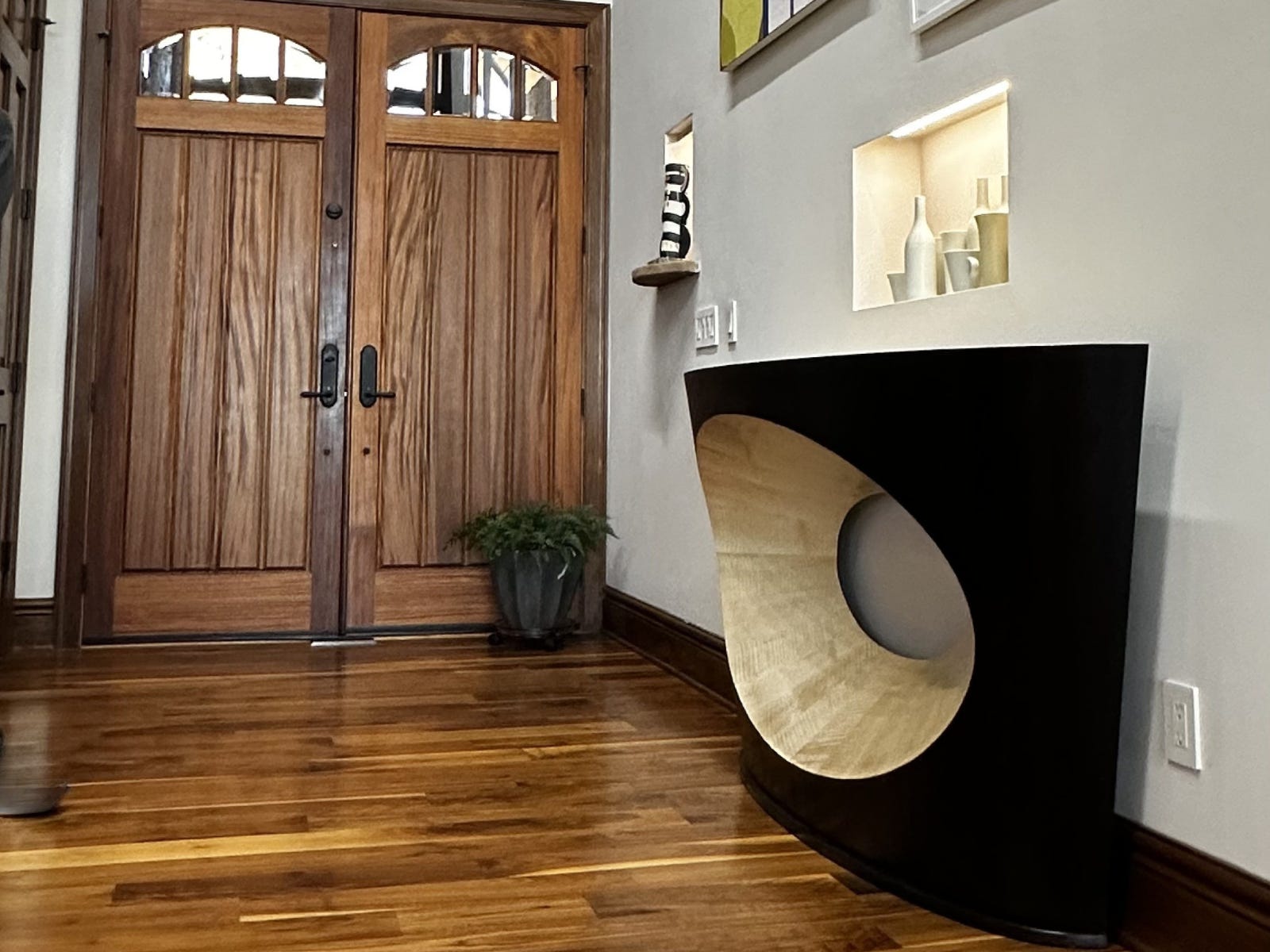
Oculus entry table. The first object that greets you.
The best tables are not isolated sculptures. They are responses to light, to scale, to movement through a room, to materials, to the emotional tone of a home, to the way a family actually gathers. When a table fails to answer those things, you feel it, even if you can’t name it.
A large table may technically seat ten people, but if the legs or pedestal interfere with leg room, or there isn’t enough room to move around seated chairs, the experience becomes something people endure rather than enjoy. The limiting factor is rarely the chairs. Adults do not shrink because a room is crowded. They need to be accommodated.
Even something as seemingly secondary as the rug beneath the table matters. Ideally, all four chair feet remain on the same surface when someone sits down and moves away from the table. When two chair legs land on the rug and two land off it, the chair’s balance changes. It happens every time someone pulls in or pushes back. What should be a relaxed meal becomes an effort to balance the chair rather than enjoy the soup.
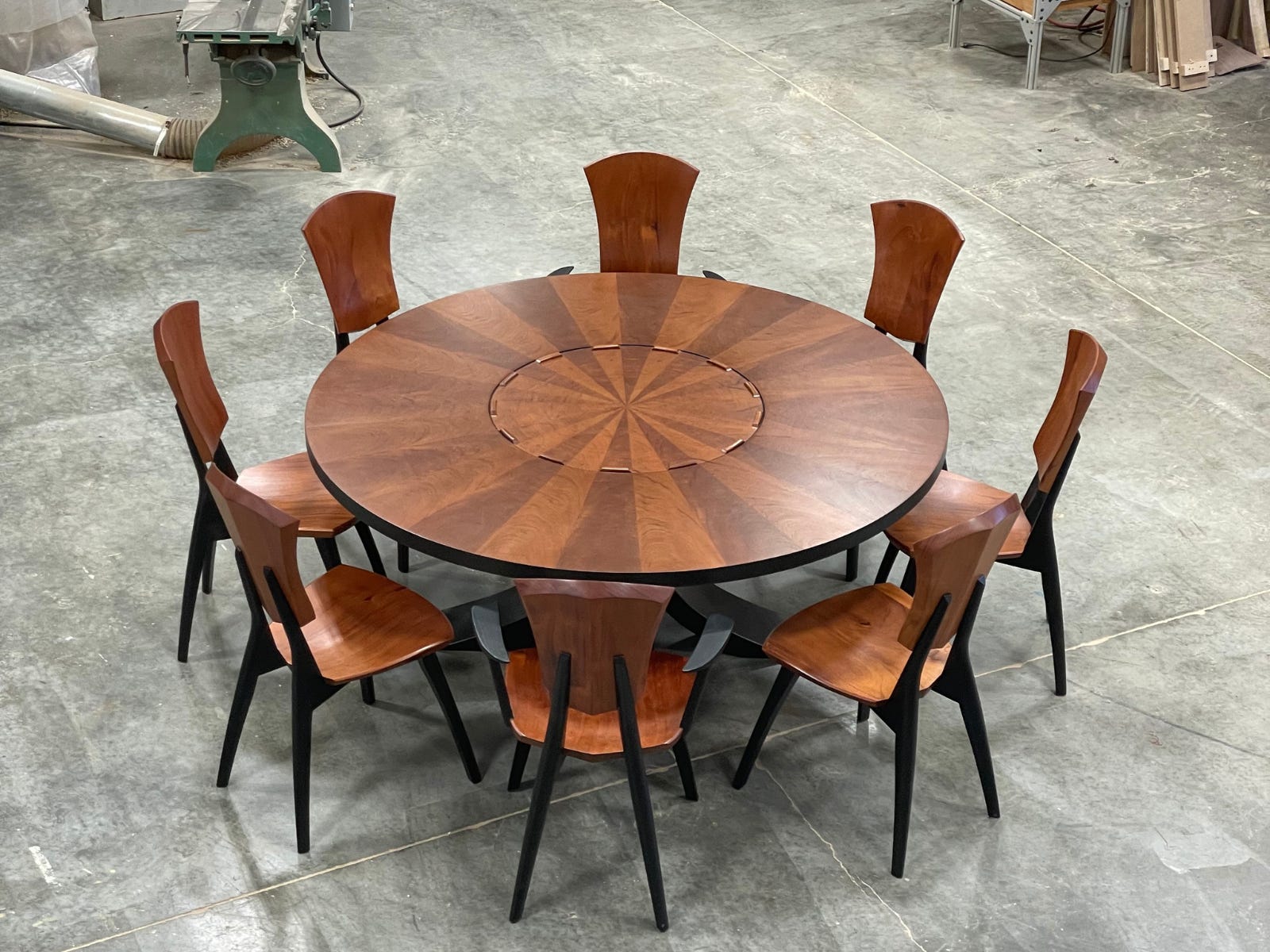
Crescent table with Lily chairs. At 70 inches across, the 32 inch lazy susan isn’t a detail — it’s the difference between a meal and a reach.
Recently, while working through a new commission, I wrote this to a client:
“I love this process of letting a design emerge from the sense of the home and the client’s vision. When the client is trusting enough in me, it leads to my best work, often to ideas I would not have conceived in isolation.”
That sentence probably says more about my approach to design than anything else I could write.
The older I get, the less interested I become in imposing the same object onto every room or every client. What interests me is responsiveness. Whether I’m standing in the room or working from drawings, photographs, or a FaceTime walkthrough, I want to understand the space and listen to the client before any design decisions get made. The best results come when the honesty is there and nobody’s ego gets involved.
The best clients are not simply purchasing an object. They are participating in the emergence of something that will eventually become part of their daily life. When I think back on how this has worked over the years, it feels like the act of honoring the client and the process invites the perfect form to show up. When one begins to recognize that the ideas are not coming from you but to you, then one can learn to nurture the space that invites them.
Over time, I’ve come to believe one of the things that elevates a craftsman is the ability to think beyond the object itself. Not simply whether a piece is beautiful in isolation, but whether it supports the life around it gracefully. Furniture influences movement through a space, the feeling of arrival into a home, the ease of conversation, the visual calm of a room, and the way people gather together. Sometimes the role of the designer is not simply to fulfill a client’s request, but to help them understand the lived consequences of it. A room can technically hold more furniture than it’s owner can comfortably live with.
That kind of flexibility does not come from chasing trends. And it does not come from abandoning discipline. Ironically, it comes from going deeper into proportion, into process, into materials, into structure, into execution. Because the more fluent you become technically, the less trapped you are stylistically.
I think this is one of the reasons so many woodworkers struggle to move beyond a single aesthetic vocabulary. It is not necessarily a lack of creativity. Often it is a lack of trust. Trust in their eye. Trust in their process. Trust in their ability to execute an idea cleanly enough to pursue it with confidence. Good process creates freedom. When your tools are predictable, when your joinery is reliable. When your understanding of structure is sound, the mind begins to open creatively because it is no longer consumed by survival.
Developing an original voice in furniture is something deeper than simply modifying an existing design or adding decorative gestures to make a piece appear different. Originality emerges when a maker begins to understand proportion, structure, material, architecture, and human experience deeply enough that new forms arise naturally from that understanding.
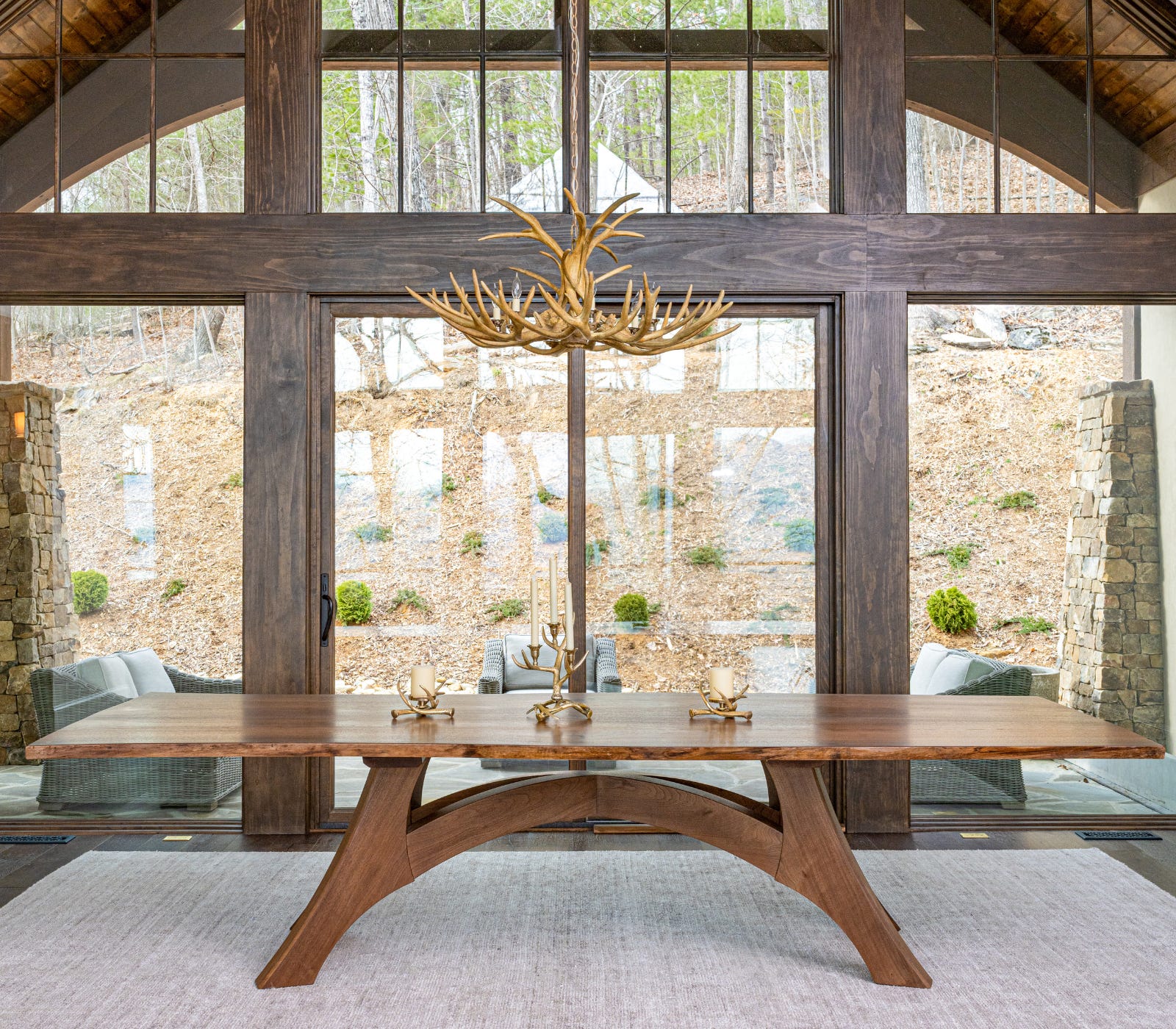
The original Timber Frame Table, designed to resonate with the architectural forms.
One of the reasons we chose the Timber Frame Table as a teaching vehicle is because it invites so many different forms of thinking, each one building on the last. You start with process and sequencing. That leads naturally into structural understanding. From there, precision at the bandsaw begins to feel different, not just accurate, but intentional. Complex glue-ups, veneered cores, jig design, visual proportion. Each one arrives when you’re ready for it, and each one expands what you believe you’re capable of. That is what begins to move a maker’s vocabulary forward.
Not every craftsman wants to become a furniture designer immediately. Sometimes a maker simply wants to take on a design that is new to them but already proven through years of refinement and real-world use, while they continue developing their own vocabulary and confidence. You don’t start off as a designer. You build the skills and techniques first. To do that you need to lean on the designs of others to cut your teeth on. That’s how I learned.
There is dignity in that tradition too.
Furniture history has always evolved through shared knowledge, adaptation, repetition, and eventually, for some, transformation. That has always been one of the deeper goals behind the Timber Frame Table course — not just to build a table, but to develop a way of thinking and working that allows a maker to move beyond a limited and safe vocabulary. Not through imitation. Not through novelty. But through understanding.
The irony is that true artistic flexibility usually emerges from greater discipline, not less.
From the Bench — Brian Boggs
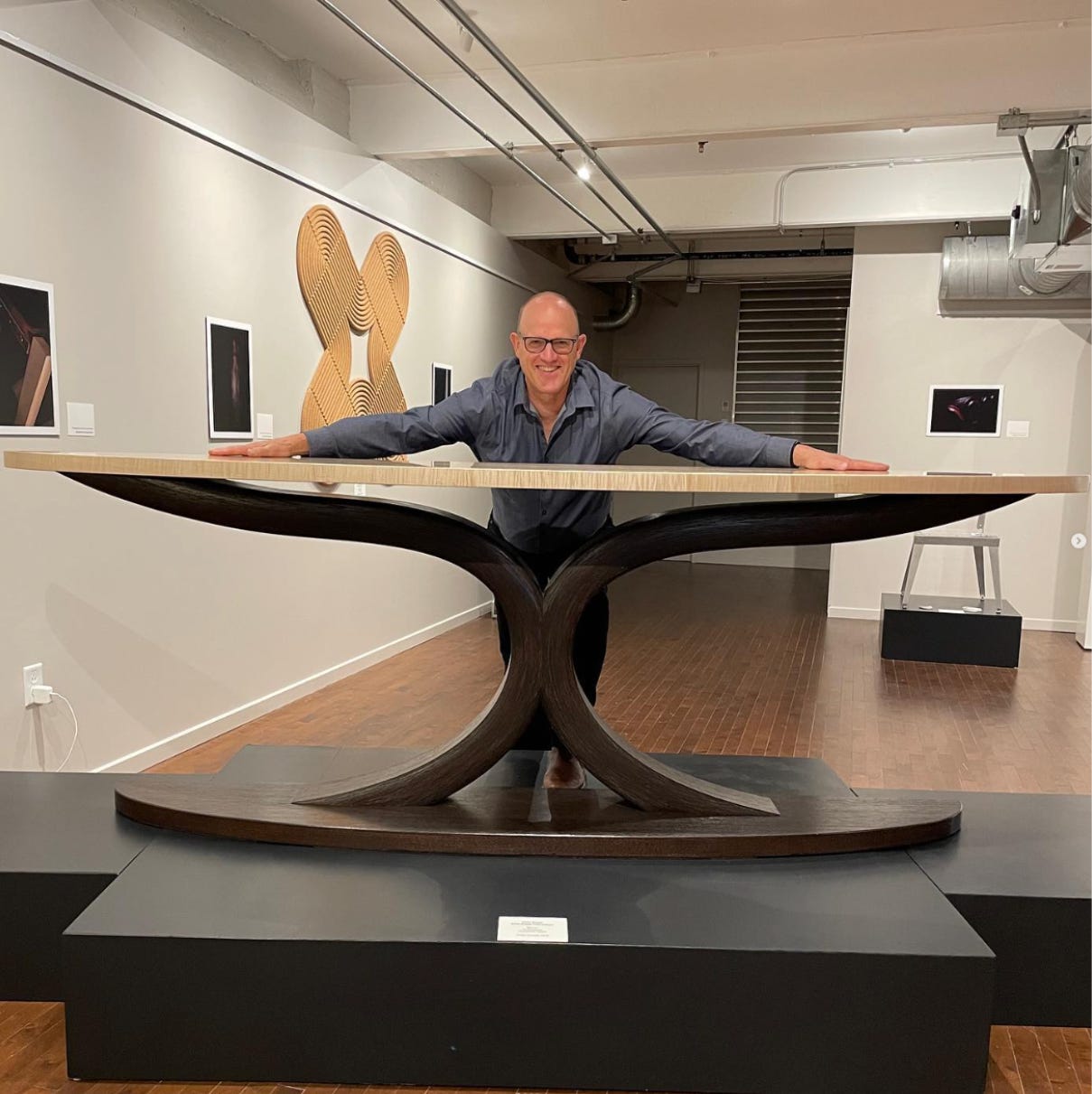
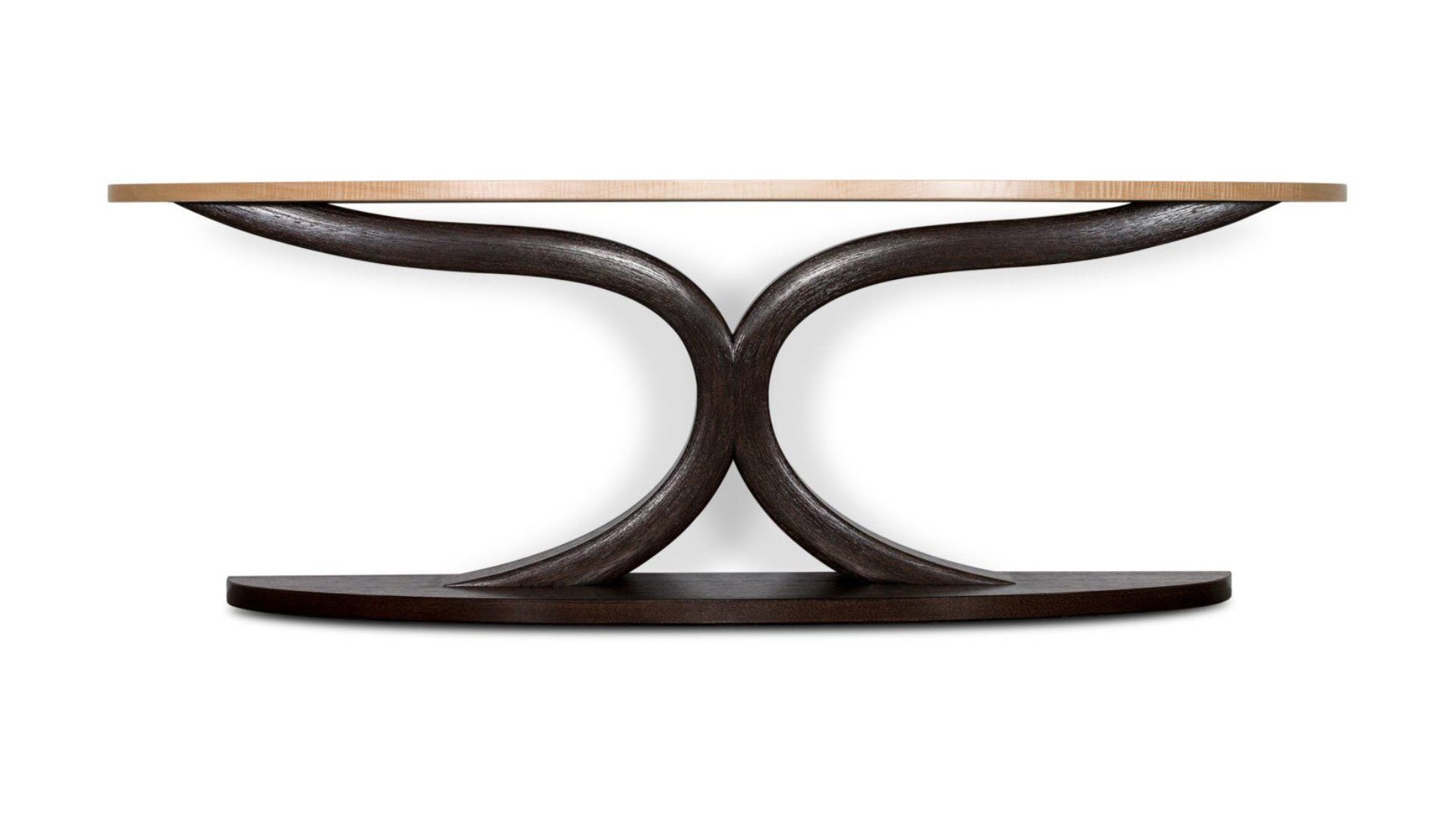
The Tango table. Nine feet of curly maple and bent laminated oak.
The Timber Frame Table course is open. What I’m hearing back from the makers building it right now is exactly what I hoped for. Makers discovering what their bandsaw can do beyond resawing. Gluing wide veneers without a vacuum press. Thinking differently about glue application in ways they hadn’t before. Small shifts that change how you work permanently. If you’ve been waiting, here’s the door:
The course is $800.


