
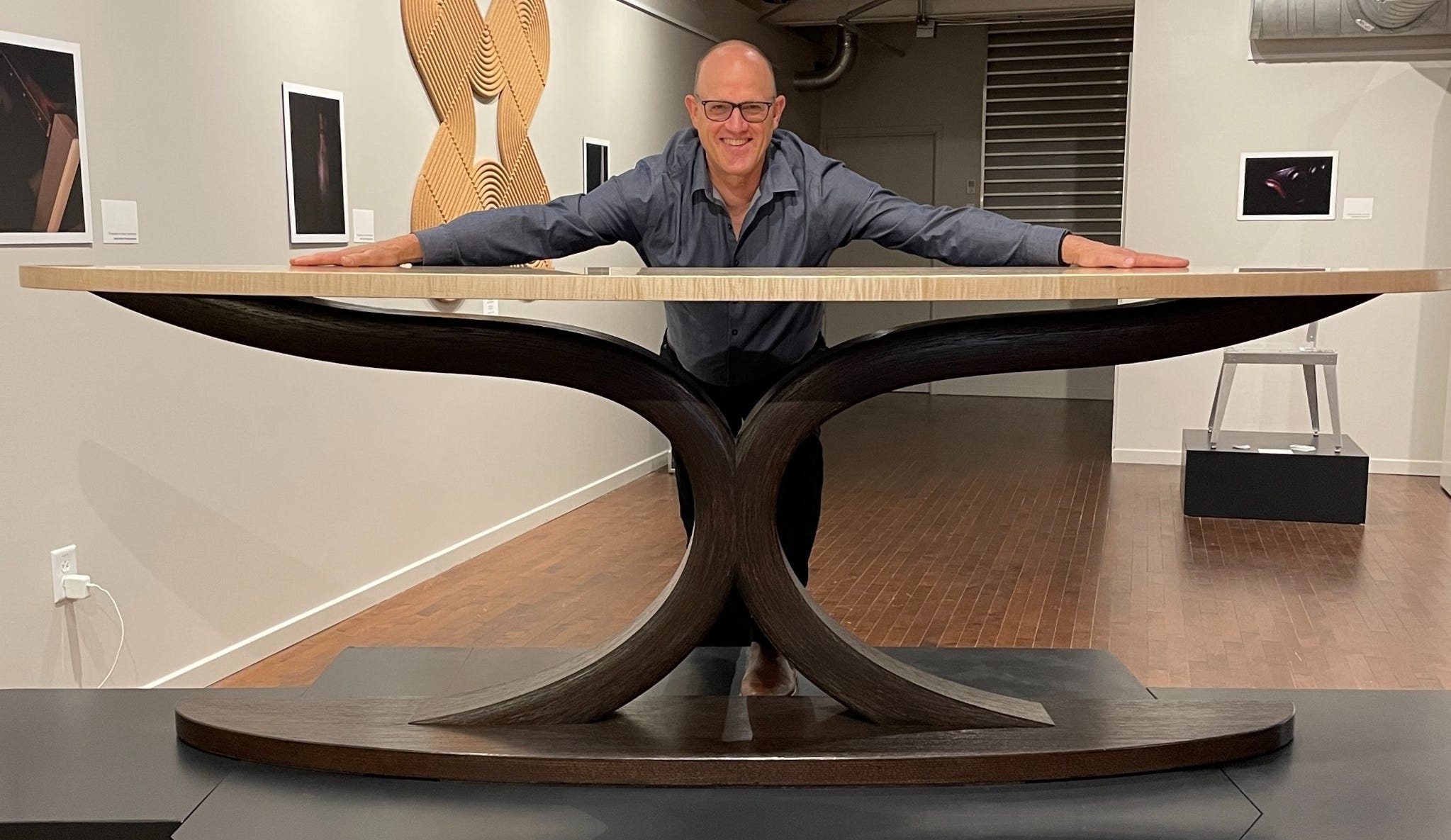
Brian with his Tango table, a nine-foot-long, 22-inch-wide entry table.
Why make it in the first place?
What must it do?
How should it be made?
What will it cost?
These are familiar questions, but I have come to believe that the way we approach them determines almost everything that follows in the design process.
We often talk about design as though it begins with form. We imagine the sweep of a leg, the shape of a back, or the proportions of a table. We may begin with a material we want to use, a technique we want to explore, or an image we have been carrying around in our heads.
But before I begin drawing, I need to understand why the object should exist.
There are already more chairs, tables, cabinets, and tools in the world than we need. Making another one requires time, material, energy, and attention. It should have a reason for being.
That reason does not have to be grand. A piece may need to solve a practical problem for one person. It may need to fill a gap in a furniture line, reach a particular price, respond to a room, or give a shop a more intelligent way to use its tools and materials. Sometimes its purpose is to explore a structural or visual idea and discover where that idea might lead.
But the reason matters because it changes the work.
A chair intended to be built repeatedly asks different things of a designer than a chair commissioned by one person. A table created for a particular architectural setting can respond to that room in ways a production table cannot. A piece designed to explore an idea may be allowed to take risks that would make little sense in something meant to be produced efficiently.
None of those purposes is inherently more creative or more worthy than another. They are simply different assignments.
Problems arise when we have not decided which assignment we are actually trying to fulfill.
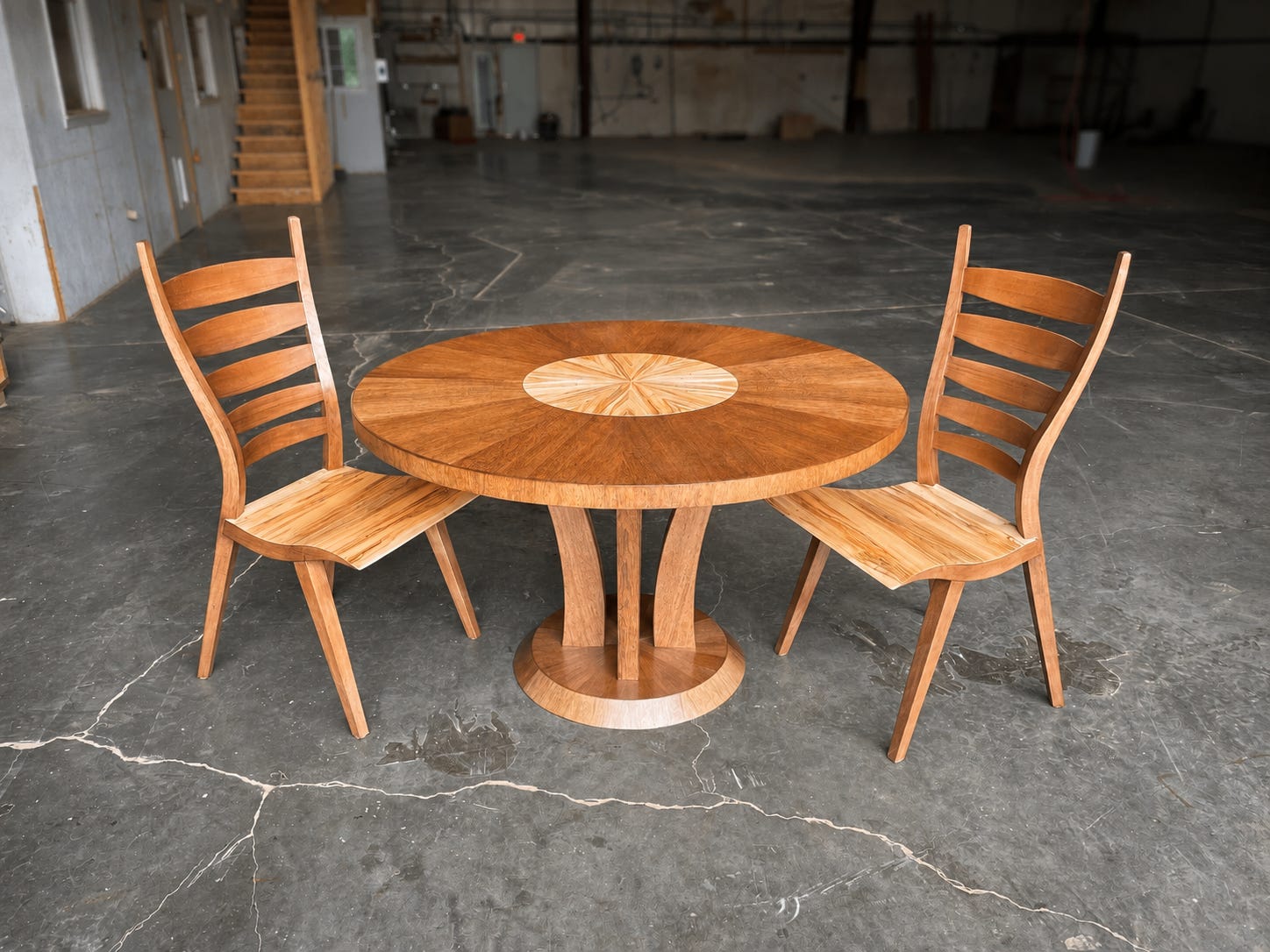
The Cio chair was designed with both the experience of sitting and the realities of repeated production in mind.
The pieces shown here played very different roles within our portfolio. Some needed to be made repeatedly and consistently. Others were individual commissions shaped by a particular client, setting, or scale. Still others gave me room to investigate a construction method or follow an idea further than production would allow.
They do not all look alike, nor should they.
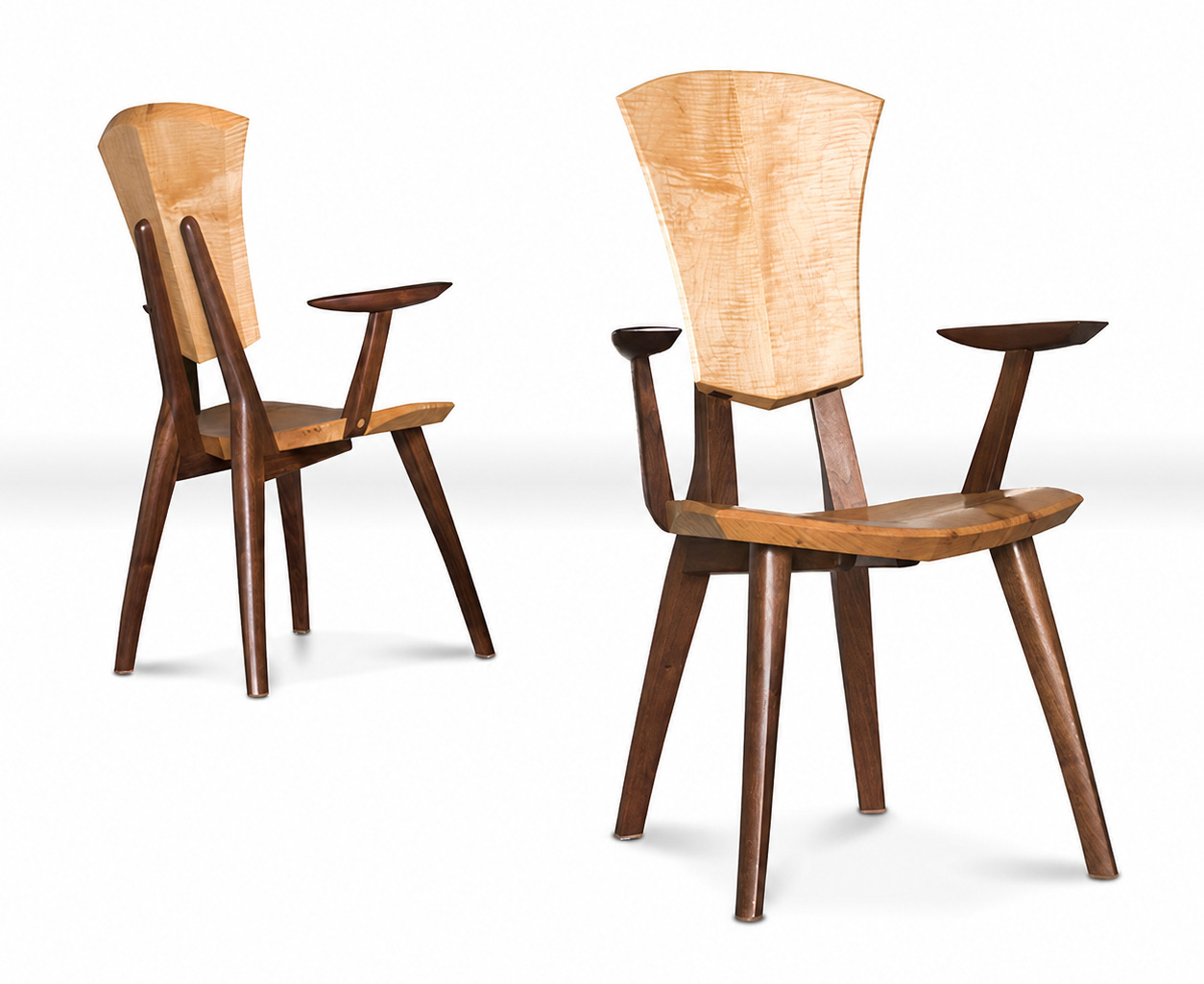
The Lily chair answers a different assignment, but it emerges from the same underlying design language I use in all my chairs.
That distinction gets at what I mean by a design language.
A recognizable style can be applied to almost anything. A curve, proportion, joint, or decorative detail can be repeated until it becomes a signature.
A design language goes deeper. It is the collection of questions, priorities, and relationships that guides one decision into the next.
If that language is coherent, the finished pieces do not need to share an obvious shape. They may look very different because they were created to do very different things. What connects them is not a repeated gesture, but the thinking that allowed each form to emerge.
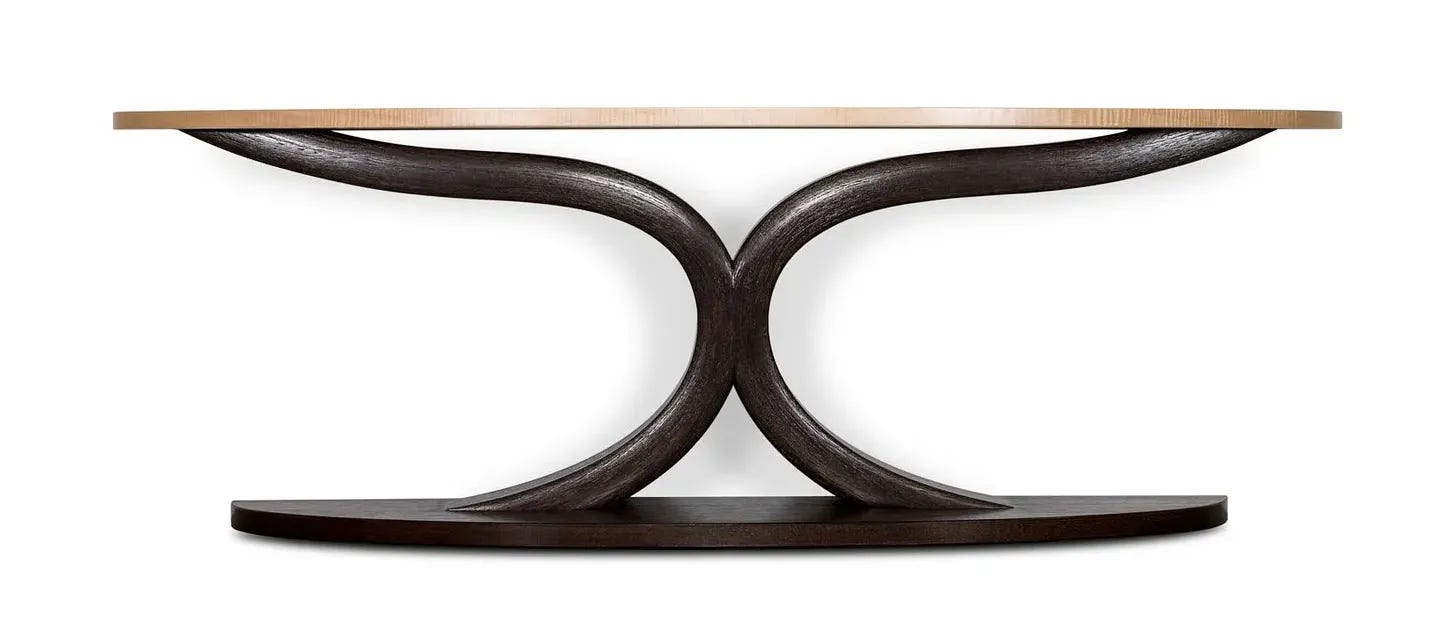
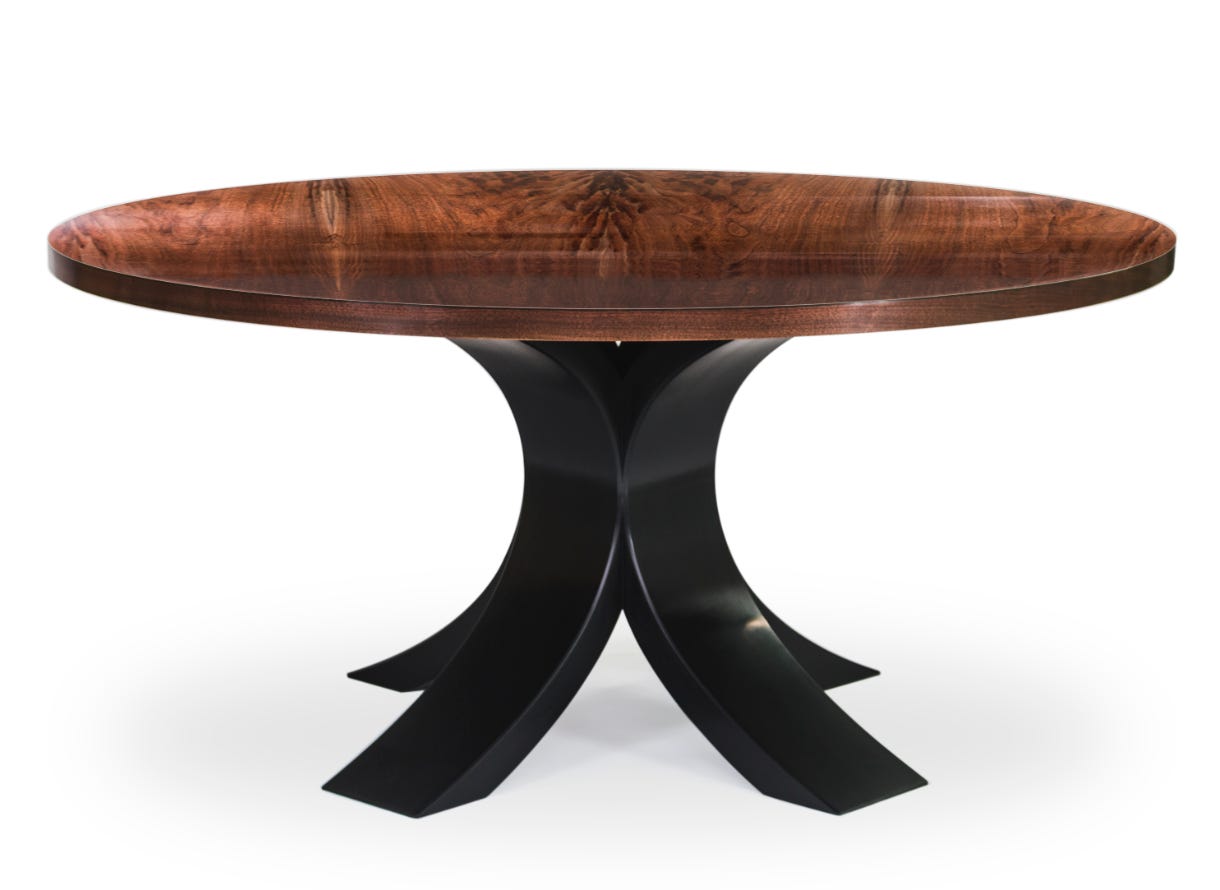
The nine-foot Tango entry table and the Crescent dining table were designed for very different purposes. What they share is a language of balance, movement, and structural elegance.
This is also why the practical questions cannot be separated from the creative ones.
How something will be made feeds its design development. So do pricing targets. These conditions influence materials, joints, tooling, labor, structure, and scale. Ignoring them does not protect creativity. It simply postpones the moment when reality begins making decisions for us.
Design becomes interesting when all of these questions start interacting.
A change intended to improve comfort may alter the structure. A more efficient process may open a visual possibility that was not available before. A limit on cost may force us to identify what the piece cannot afford to lose. A new material may solve one problem while creating three others.
There is no formula that resolves those tensions. That is the work of designing.
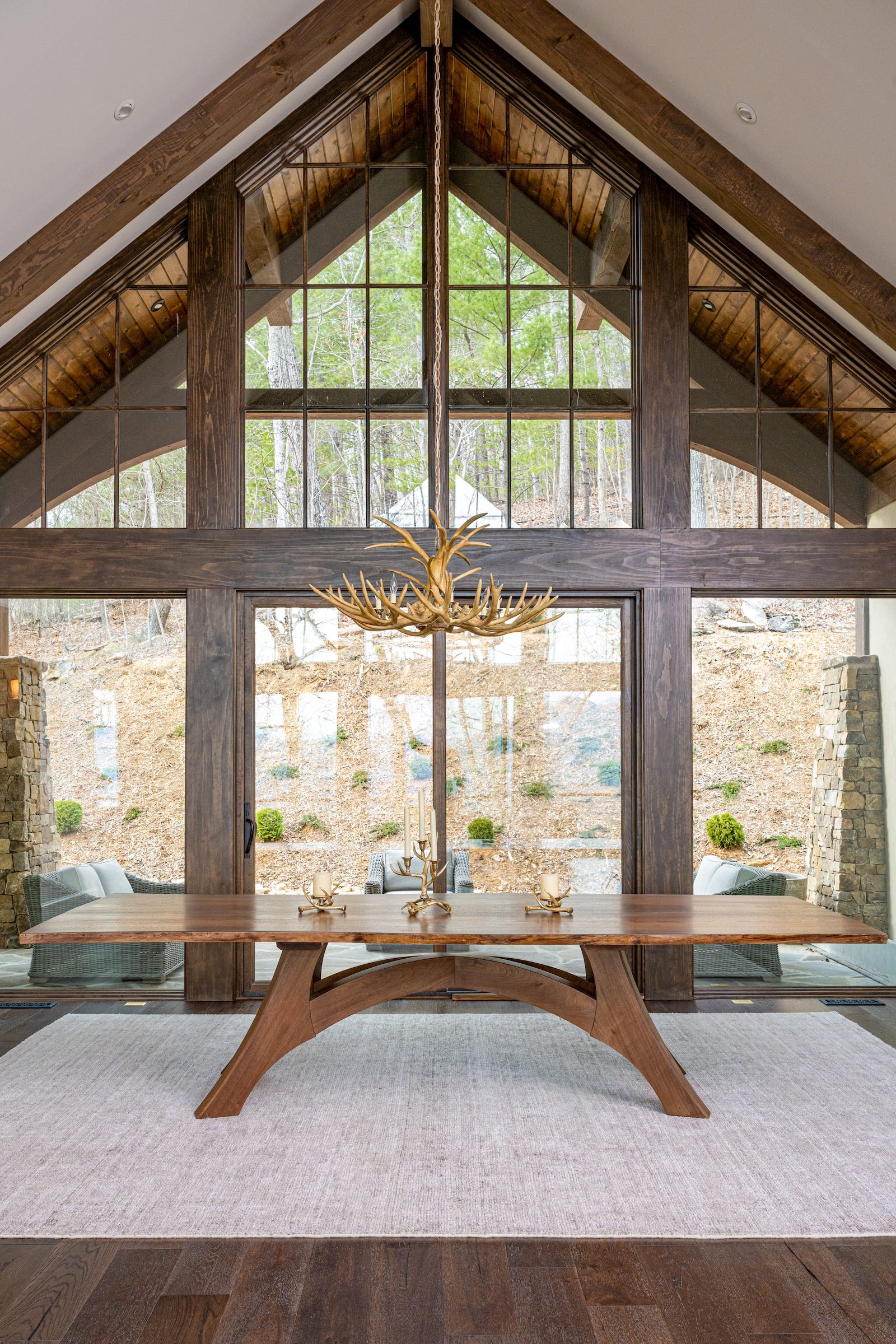
The original Timber Frame Table in the home that inspired its design.
After more than forty years, my own design language is still changing. Every new piece reveals something I did not understand as well as I thought I did. The work keeps presenting new conditions and, when I am paying attention, asking better questions.
This Sunday, August 16, I’ll explore these ideas in a virtual presentation hosted jointly by the Bay Area Woodworkers Association and Diablo Woodworkers.
The presentation is called “A Design Language.”
I’ll use pieces created for very different roles within our portfolio to show how the answers to these questions changed the designs that followed. We’ll look at decisions that can be seen in the finished work, as well as some a viewer would never know were there.
This will not be a formula for designing like I do. It will be an opportunity to look closely at how design decisions are made and to consider the questions that might lead you toward a language of your own.
There will also be time for questions, which is often where the most interesting part of these conversations begins.
Sunday, August 16
4:00–5:00 PM Pacific
7:00–8:00 PM Eastern
Live on Zoom
For more information about attending this free virtual event, please visit the Bay Area Woodworkers Association or Diablo Woodworkers website.
From the Bench — Brian Boggs
P.S. I’m looking forward to making more room for teaching and conversations like this. In November, I’ll be speaking and demonstrating for a woodworking guild in Greenville, South Carolina, and in 2027, I’ll travel to Oregon to teach a weeklong program, part of expanding From the Bench beyond the written word and creating more opportunities to share what four decades of making have taught me.
If something I have shared here has taught you something, changed the way you think about your work, or simply made you curious to try something new, an $8 paid subscription is one way you can help me keep sharing lessons from the bench.
We’re not putting up a paywall. We’re asking for your support. There won’t be a separate stream of writing reserved for paid subscribers. Everyone will continue to have access to what we publish here.
Your subscription helps make the next essay possible.
Making the bent-laminated base of the Tango table.


